
Last updated September 20, 2026
Full 25-point door and opener safety check with every visit - springs, cables, rollers, tracks, and your LiftMaster or Chamberlain opener included
You get a price before we start. It does not change when the truck arrives.
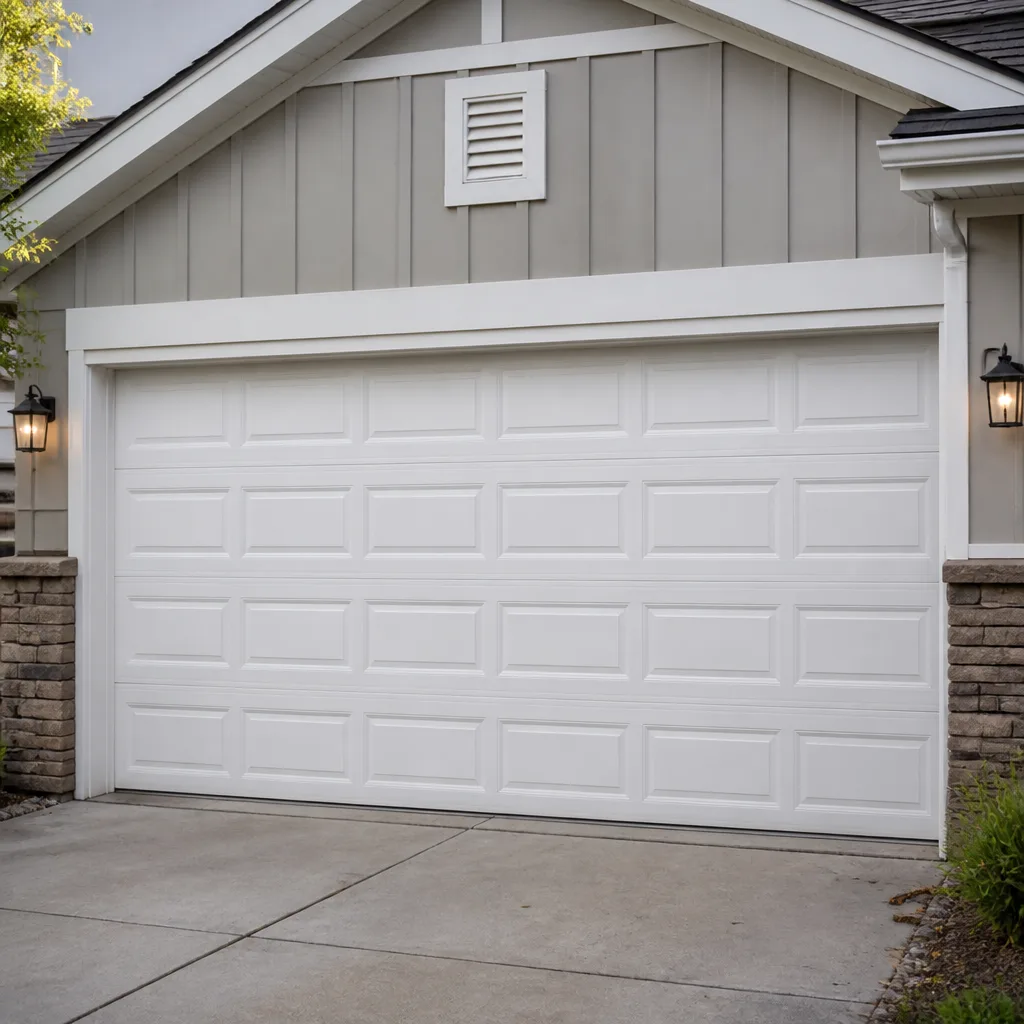
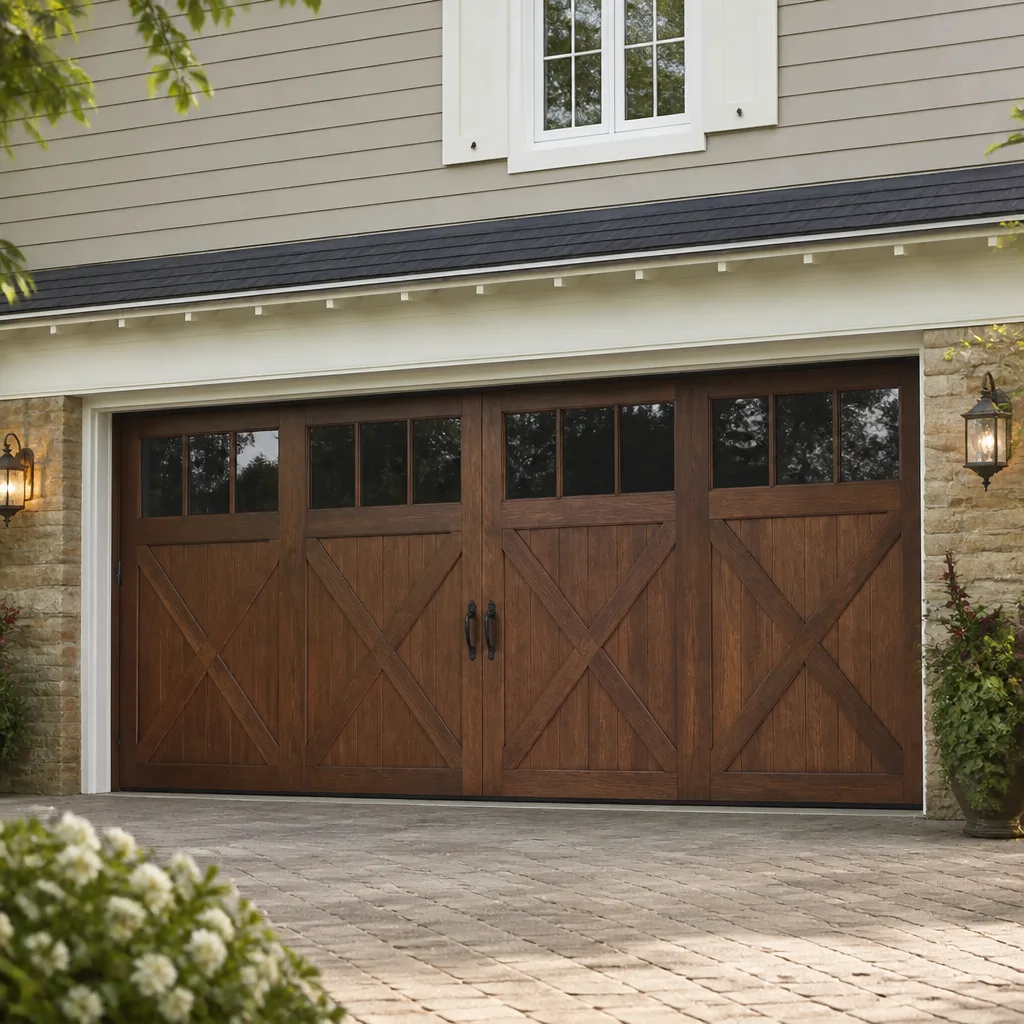
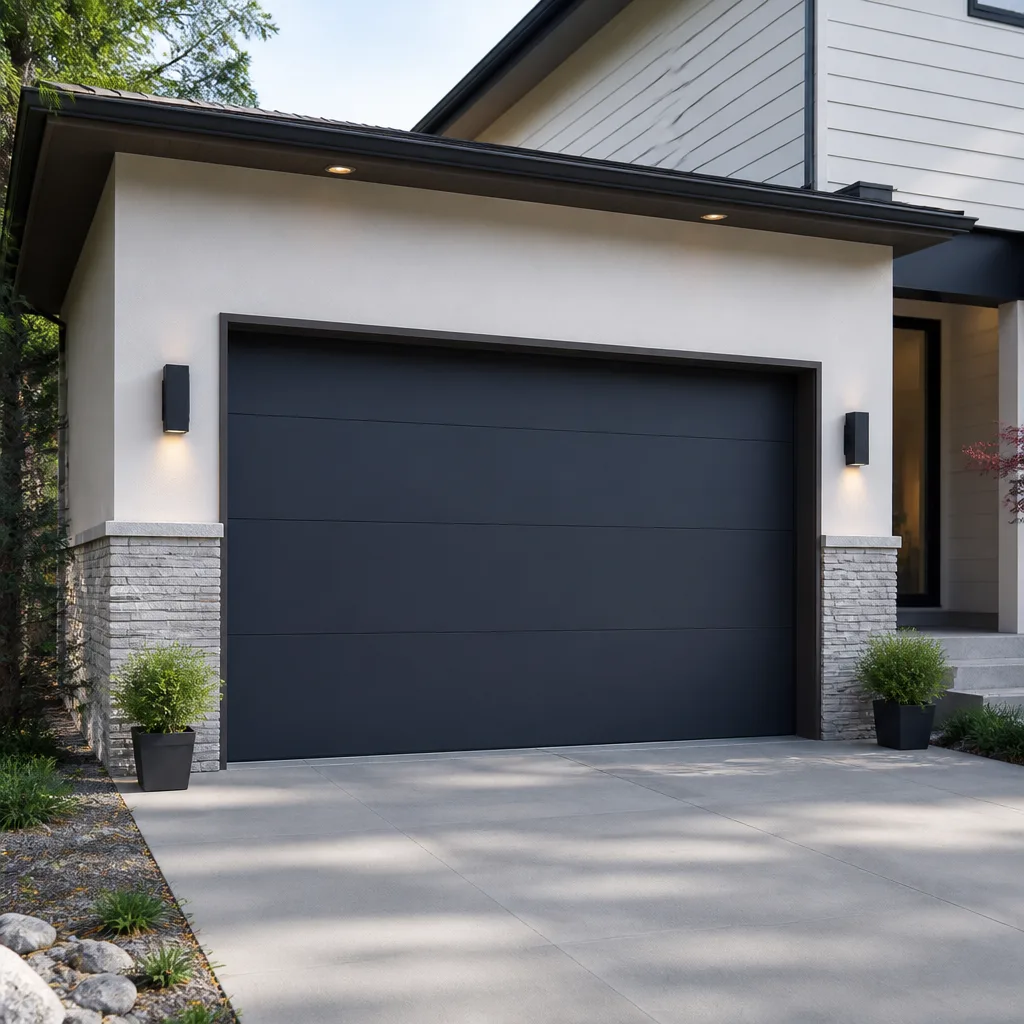
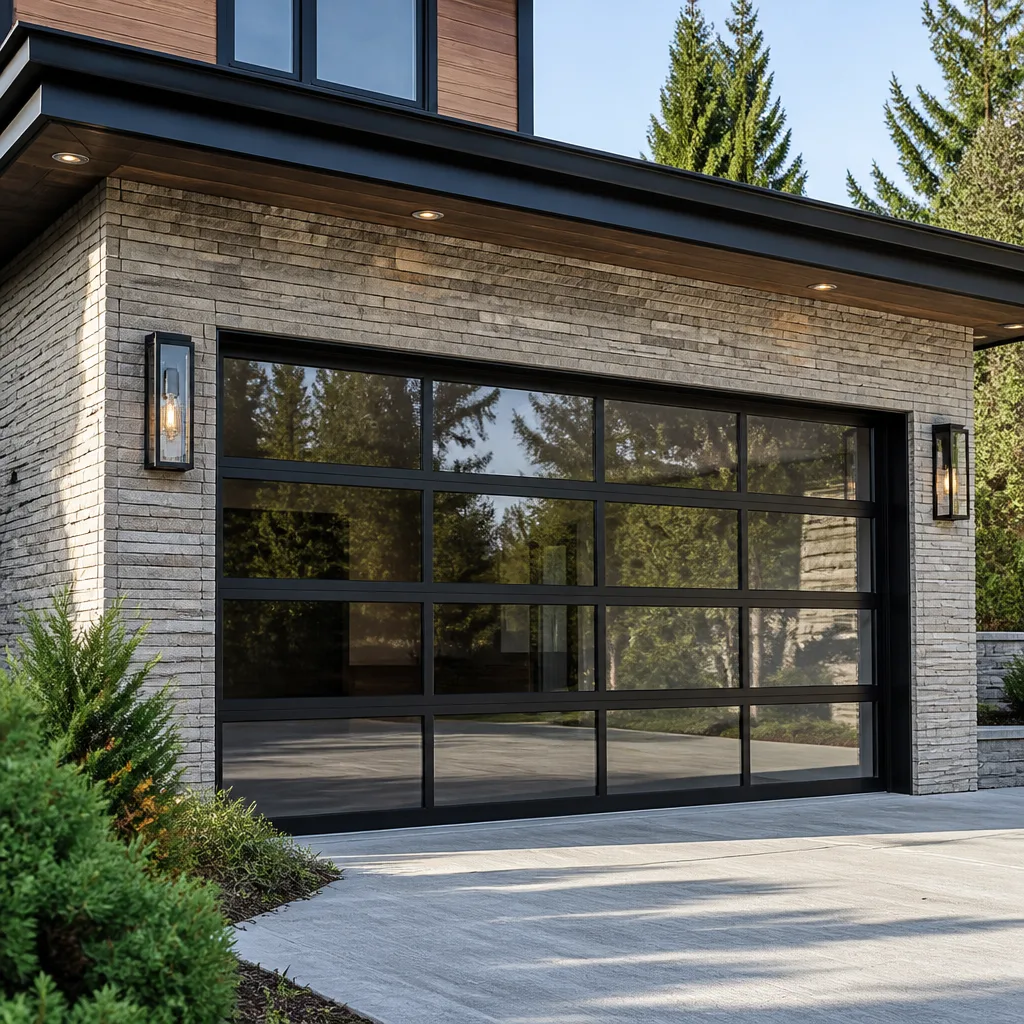
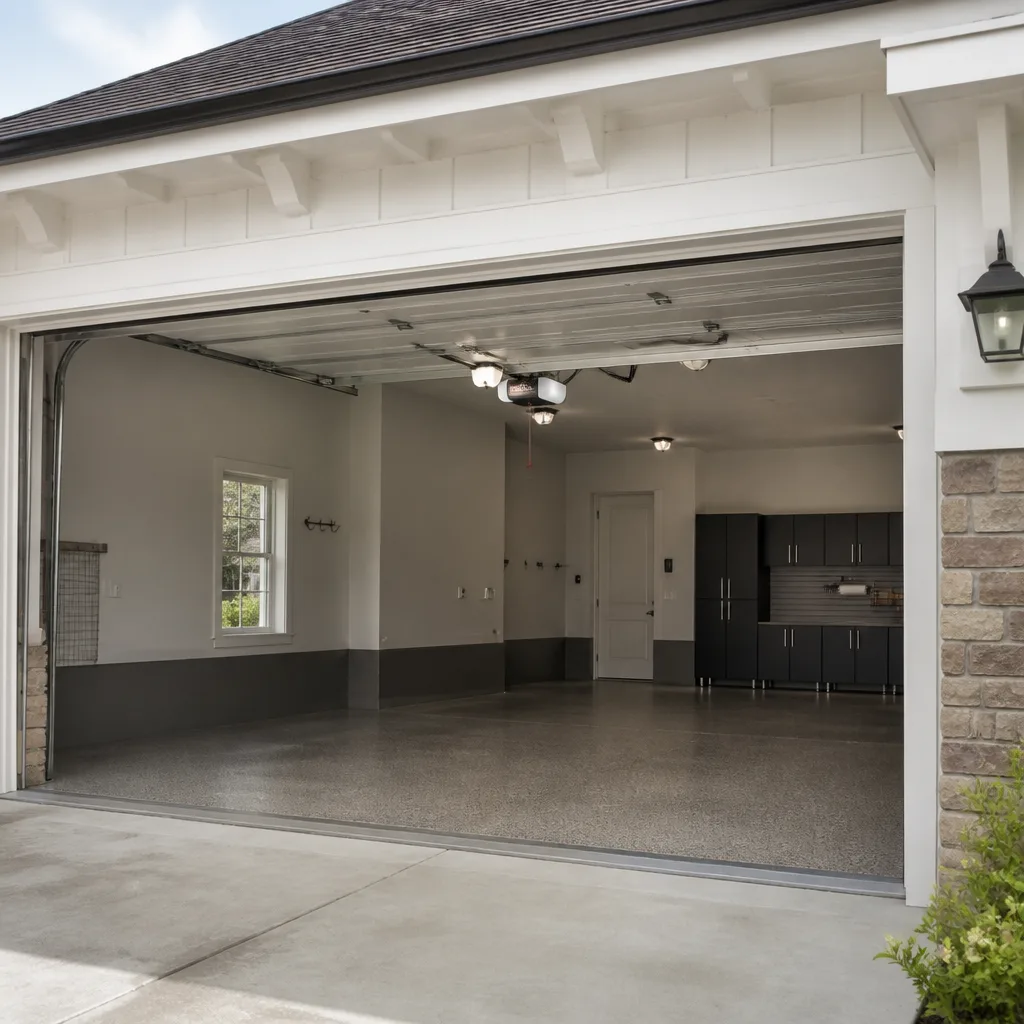
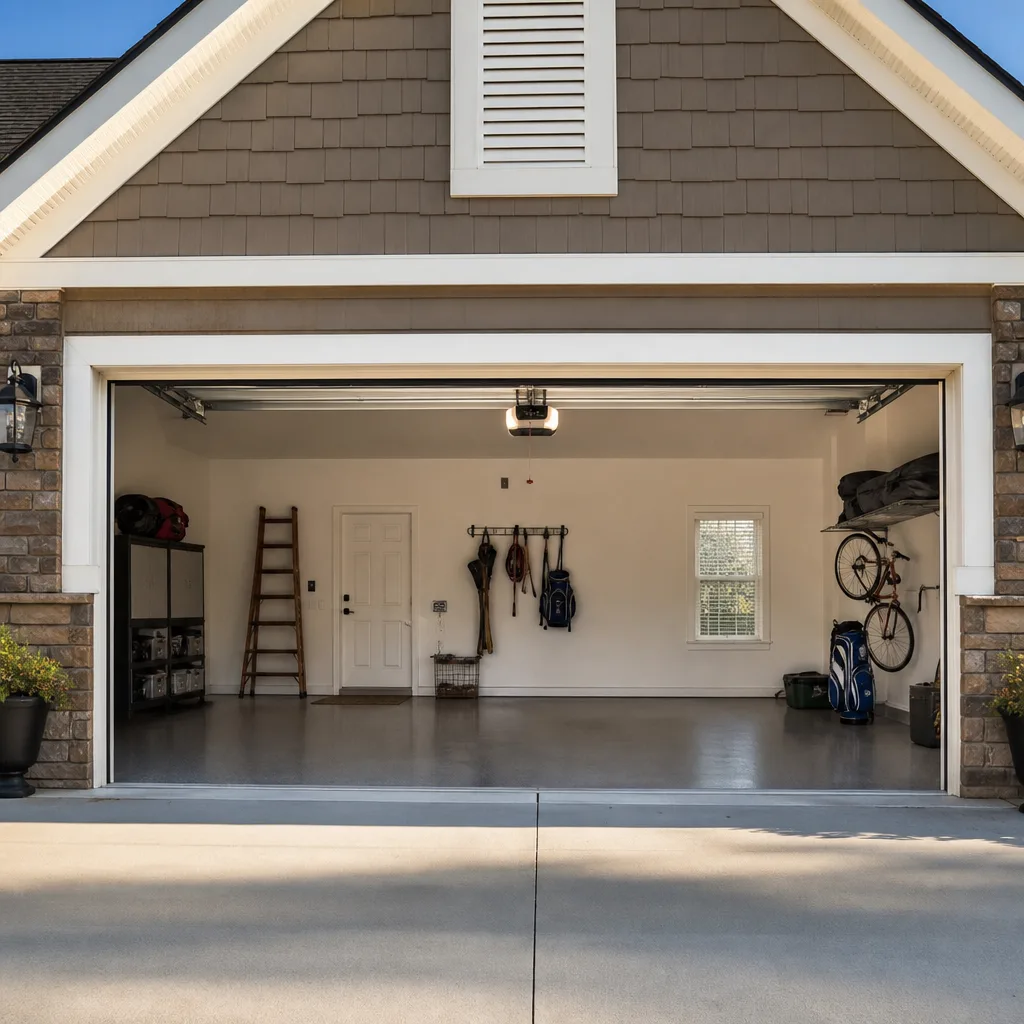
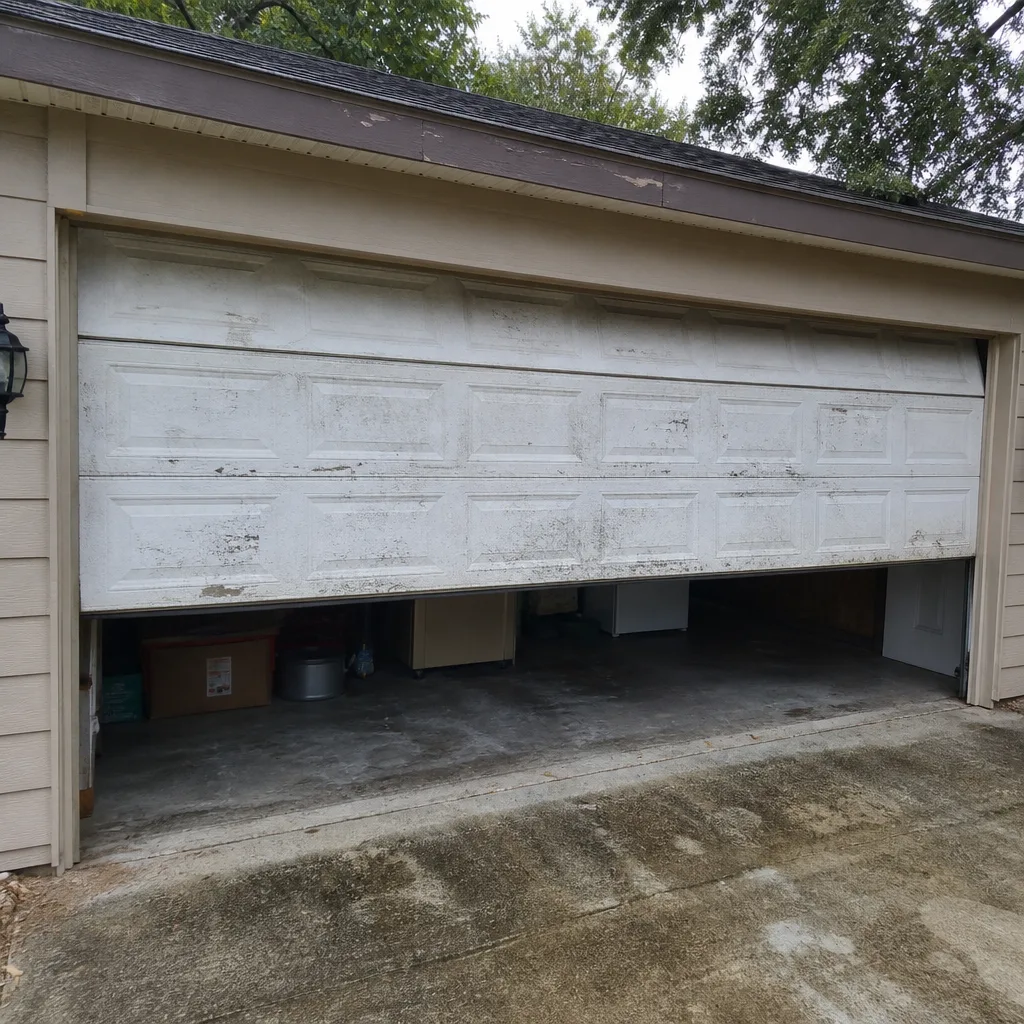 Before
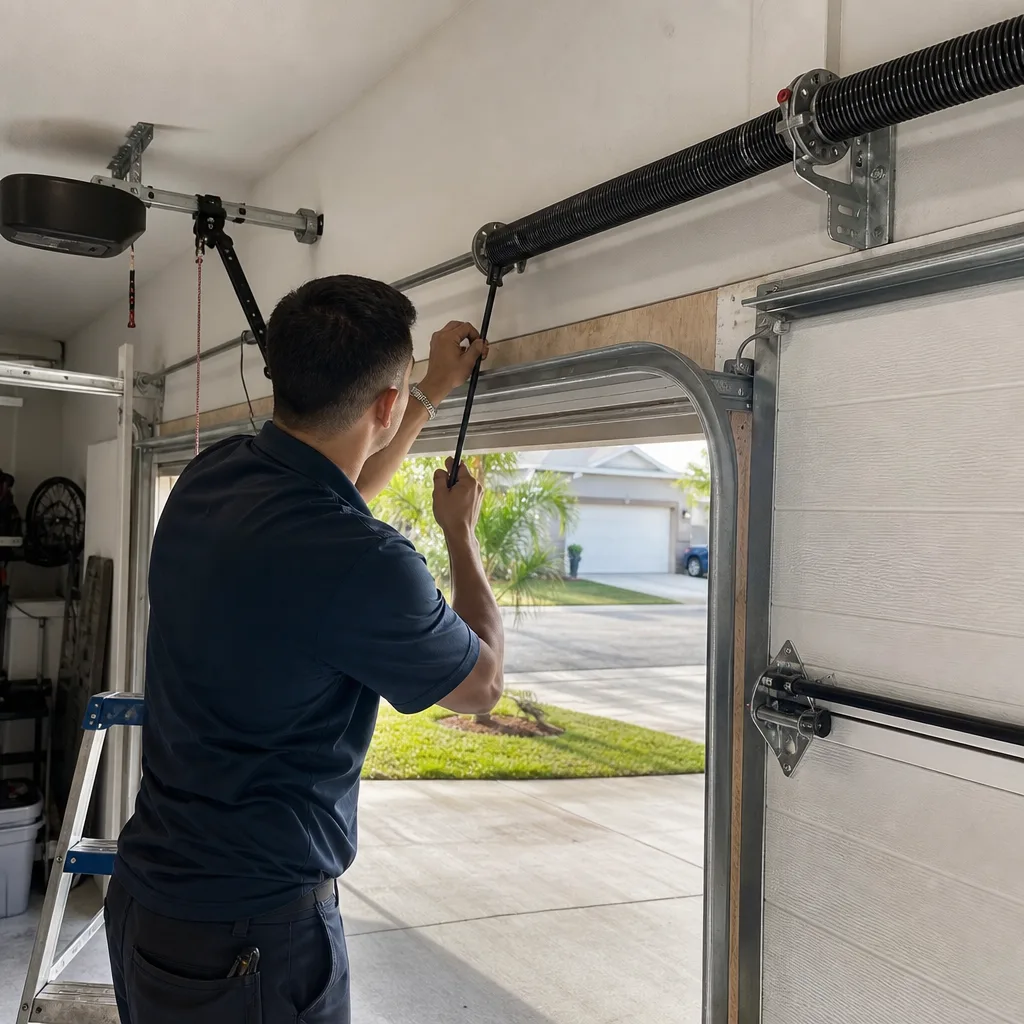 After
After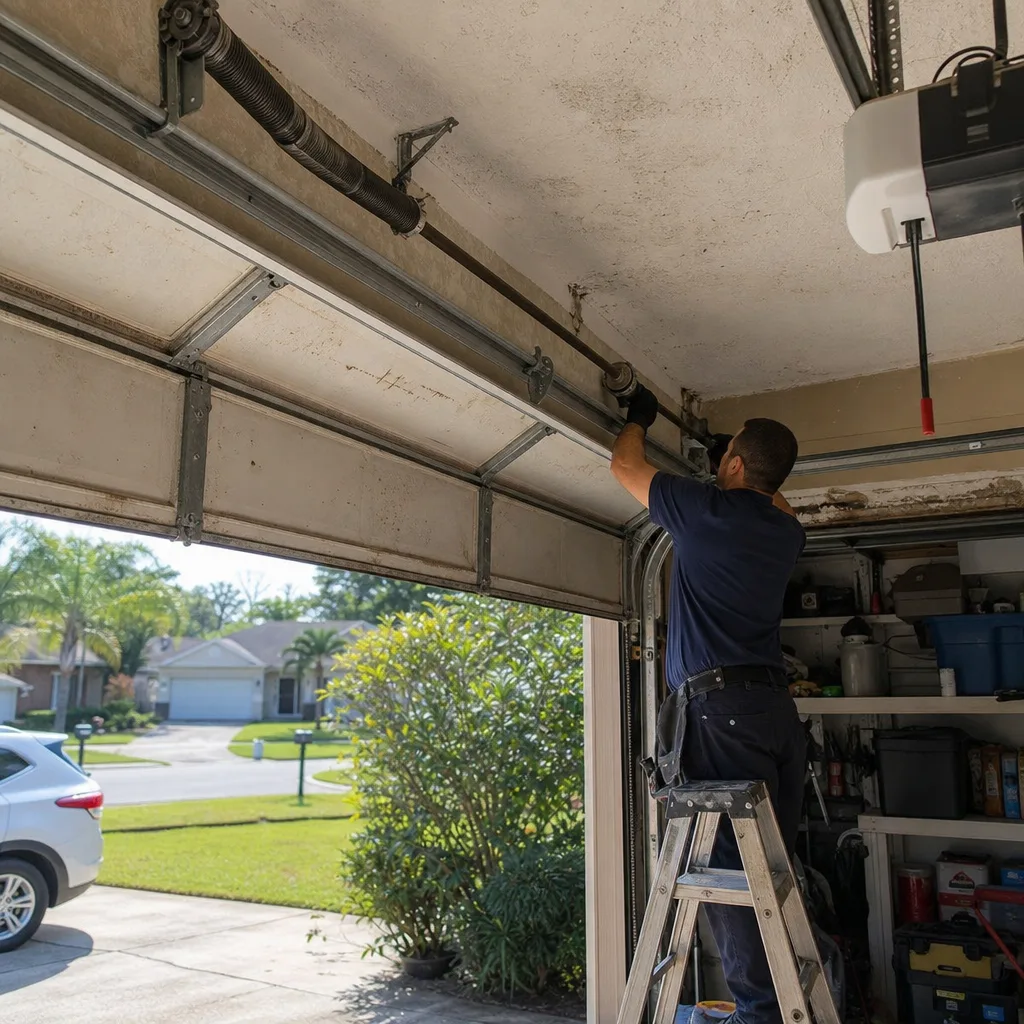 Before
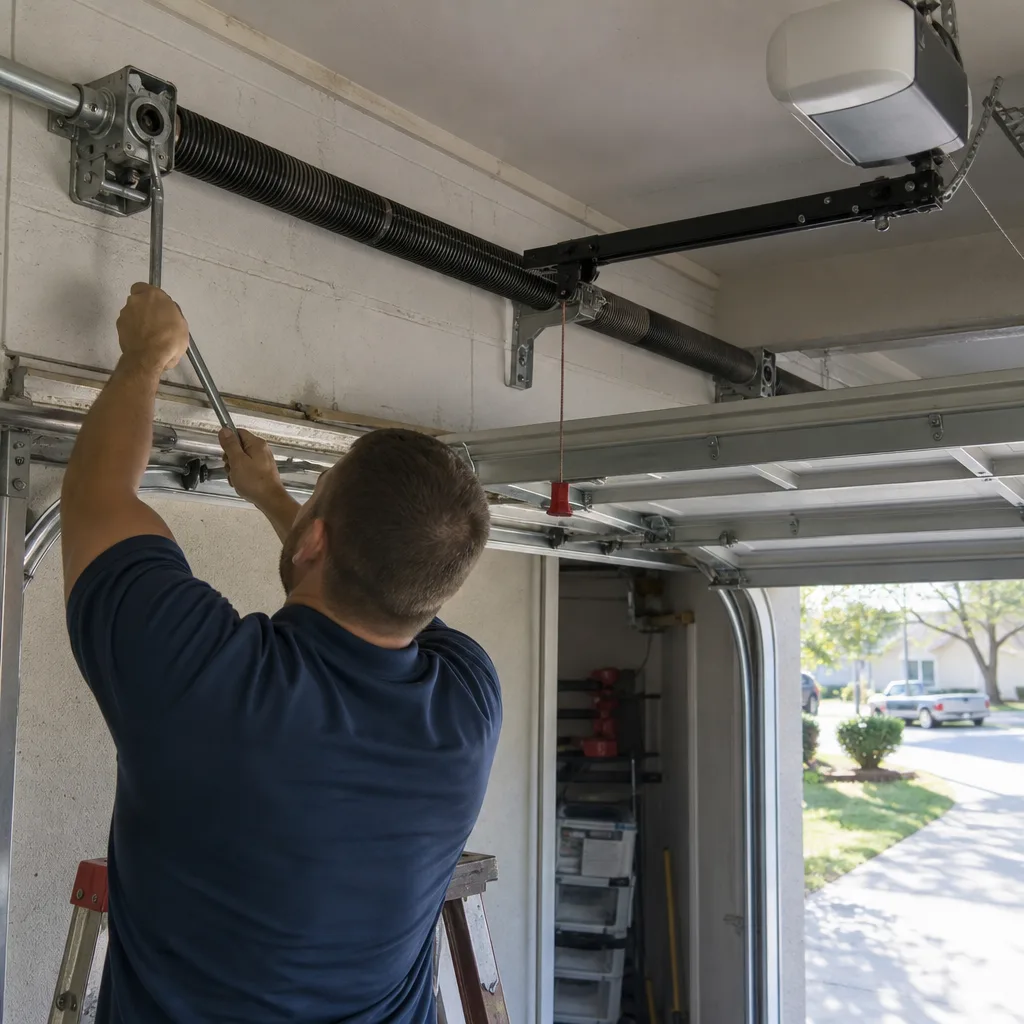 After
After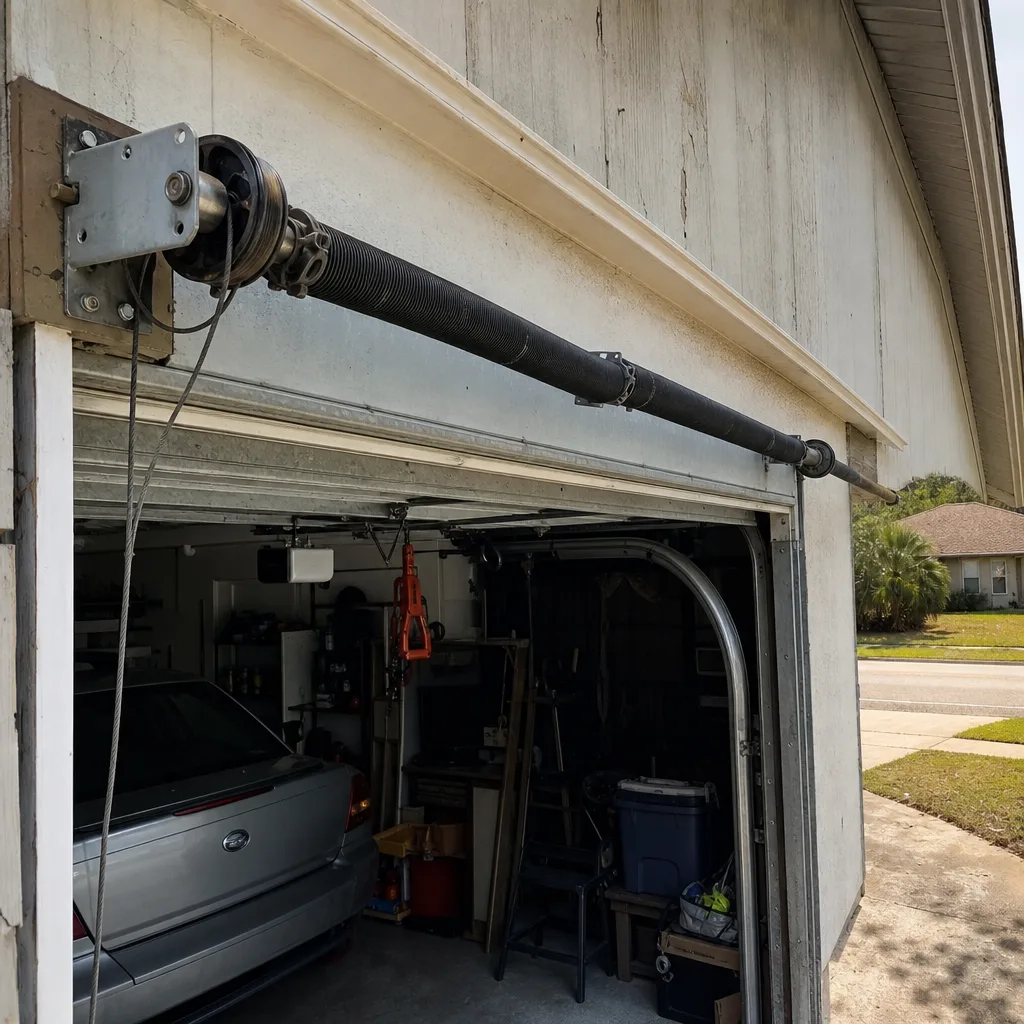 Before
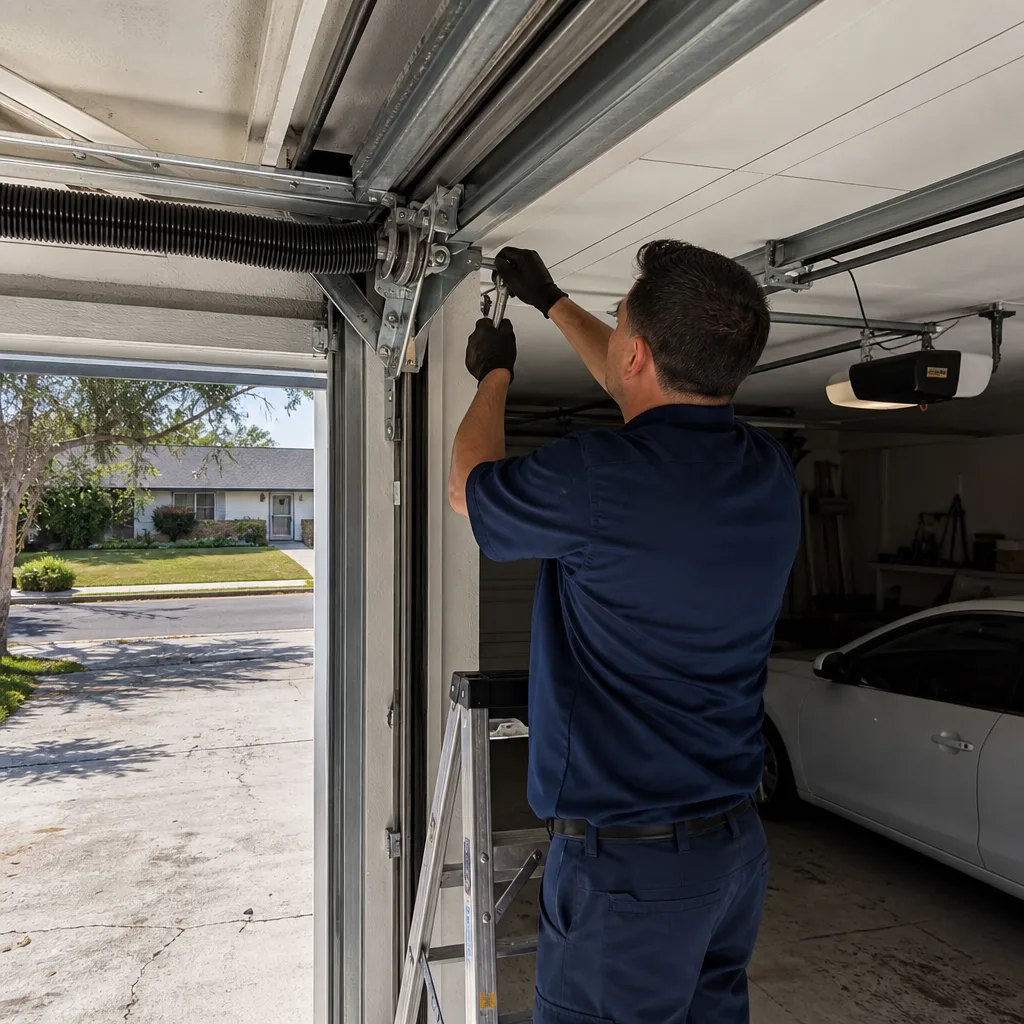 After
AfterGarage Door Warning Signs: A Brandon Homeowner’s Reference Guide
Most garage door guides stop at the symptom. They tell you a door is noisy or slow and leave you to guess what that means for your wallet. This one goes further. We’ll name the component behind each warning sign, describe the failure mode in plain terms, and attach a Brandon-market cost range so you can decide what’s urgent, what can wait, and what you can document before you ever pick up the phone. In Brandon, where summer humidity sits above 75 percent for months and afternoon storms hammer doors with wind loads, certain failures show up earlier than they do in Dallas or Phoenix. You’ll learn which ones those are.
Quick Answer
The garage door warning signs that matter in Brandon fall into three groups: safety-critical failures (torsion spring breaks, cable fraying, bottom bracket cracks) that require immediate professional attention and typically cost $180 to $650 to repair, performance problems (reversing, jerking, uneven lifting) that indicate track or logic board issues and run $120 to $400, and noise patterns (grinding, popping, squealing) that point to specific worn parts like rollers, hinges, or bearings with repair costs between $90 and $250. The fastest way to avoid a major repair is to identify which part is failing early. Most warning signs that get ignored for six months become two-repair jobs instead of one.
Table of Contents
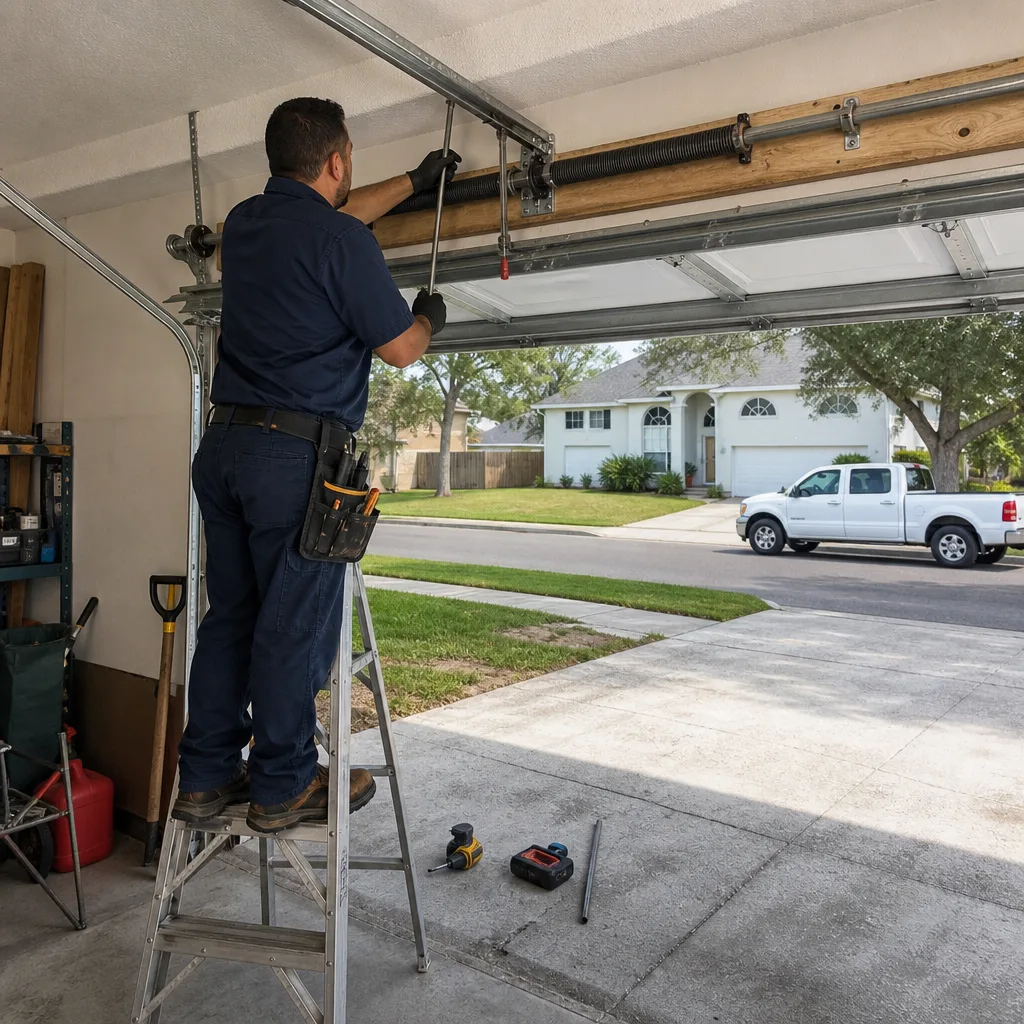
- Symptom-to-Component Diagnostic Map
- Warning Signs That Require an Immediate Safety Stop
- Warning Signs You Can Monitor and Schedule
- What Specific Noises Mean: A Noise Diagnostic Guide
- How Brandon’s Climate Accelerates Specific Failures
- What to Document Before Calling a Technician
- Cost-to-Repair Reference for Brandon
BeforeAfterSymptom-to-Component Diagnostic Map
A garage door that reverses before closing is described everywhere as a “sensor problem.” That’s one possibility. It’s also a torsion spring that has lost tension and no longer counterbalances the door’s weight, a track that has drifted out of plumb so the door binds on the way down, or a logic board running a corrupted obstruction cycle. The symptom looks identical from the outside. The part that failed, and the repair cost, are not. Here’s the map that connects what you see and hear to what’s actually wrong.
Start with the specific behavior. A door that reverses immediately after touching the floor usually means the close-force setting on the opener is too high, or the limit switch that tells the opener where the floor is has shifted. The logic board on a Genie or LiftMaster opener may just need a limit re-set. Cost in Brandon: $95 to $180. A door that reverses halfway down and never touches the ground points to a bind in the track, a spring that has lost tension, or an obstruction signal that fires when the door flexes under its own weight. That’s a different call: $150 to $300, depending on what the technician finds when the door is run manually.
A door that jerks or shudders as it moves has a mechanical problem, not an opener problem. The most common culprit in Brandon is a worn roller running on a track that has accumulated grit from humidity and storm debris. Second is a bent track section, often from a car tire nudging the bottom rail. Third is a torsion spring losing tension unevenly across its coils. You can’t fix any of these by adjusting the opener, and trying to do so masks the real failure while the damaged part wears harder against the components next to it. We explain more about repair paths on our Garage Door Repair in Brandon page.
Finally, a door that opens fine but struggles to close is frequently told it has bad springs. Just as often, the close-limit setting has drifted after a power surge, or the safety sensor lenses have filmed over with condensation and dust, which happens faster in Brandon’s humid air than in drier climates. The lenses are the cheapest thing to check first, and you can do it yourself: wipe them with a dry cloth and see if the behavior changes before spending money on a service call.
Why the Same Symptom Has Different Price Tags
This is the point where most guides go vague. The reason matters: your budget depends on which component failed, not on how the failure announced itself. The door that reverses halfway could cost $95 if the limit switch needs re-setting, or $340 if the torsion spring has dropped tension and needs replacement. Both jobs take under two hours. The difference is entirely in which part failed. That’s why Servo Garage Doors photographs the failed component before quoting a replacement. Clause 4 of The Haven Standard exists so you see which of those parts we’re talking about. Written price before any work starts is Clause 1. You can read more about what a documented repair looks like on our Servo Garage Doors Brandon home page.
Warning Signs That Require an Immediate Safety Stop
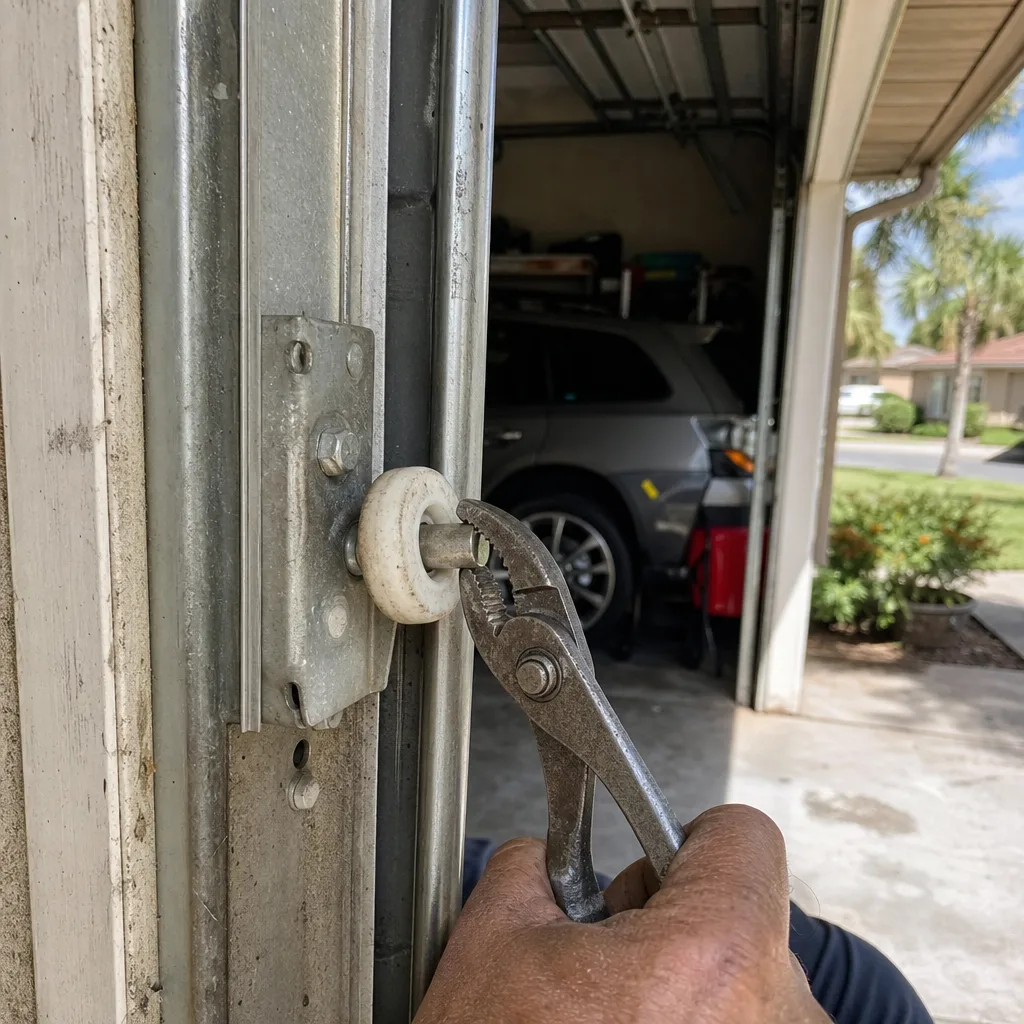
Some warning signs mean the door is dangerous to operate, not just inconvenient. A torsion spring under tension stores enough energy to move the entire weight of the door, which often exceeds 250 pounds. When one fails, the stored energy releases instantly. People have been injured standing next to a door when a spring snaps. Same for cables: a frayed cable under load can part without warning, and when it does, the door drops on whichever side the cable was holding. These are the signs that mean: stop using the door today, leave it closed or locked, and call a professional.
- Torsion spring with a visible gap in the coil. Look up at the metal shaft above the door where the spring sits. If you see a two-to-three-inch separation where the coil used to be continuous, the spring has snapped. This is the most common emergency failure in Brandon, and it’s a stop-using-the-door-now situation. Repair cost: $180 to $340 for a standard residential spring replacement.
- Cable that is fraying, rusted through more than a third of its diameter, or off the drum. Cables on a garage door are under constant tension, not just when the door moves. A frayed cable can snap while the door is sitting in the open or closed position. If you see rust blooms, missing strands, or the cable sitting loose on the drum, stop using the door. Repair cost in Brandon: $150 to $280 including re-tensioning.
- Bottom bracket that is cracked, pulling away from the section, or missing bolts. The bottom bracket is the cast steel plate that connects the lifting cable to the bottom of the door. When it fails, the cable pulls free, and that corner of the door can come down hard. This part fails more often in Brandon because the bottom section sits in rain splash and morning condensation more days per year than in inland Florida. Repair cost: $120 to $220.
- Door hanging unevenly in the opening, with one side four inches or more below the other. This usually means one cable has slipped or one spring has failed while the other still holds. The door can bind, jump the track, or drop if the remaining cable lets go. You need this looked at before you operate the door again. The diagnosis usually lands between $100 and $400 depending on whether it’s a cable re-seat or a full spring replacement.
One more note on safety: torsion spring and cable work is not a DIY job. The springs on a residential door carry enough stored tension to cause serious injury if released incorrectly. Even if you have mechanical experience, the specific winding bars and technique for this work are not intuitive, and the failure mode is not forgiving. We built Servo Garage Doors Brandon on the rule that the customer sees the failed part before we quote a replacement, but seeing the part is not the same as touching it. Leave spring and cable work to a trained technician.
Warning Signs You Can Monitor and Schedule
Not every garage door warning sign means an emergency. Some mean a part is wearing out on a predictable schedule and you have time to plan for the repair at the price you budget for. Knowing the difference is what lets you triage instead of deferring everything out of caution and ending up with a bigger job later.
Rollers that are worn or noisy typically fail over 12 to 18 months, not overnight. If you hear a rolling or grinding sound and the door still opens and closes without binding, you can schedule this repair. In Brandon, bottom-section rollers wear faster than upper-section rollers because they sit in the damp, splash zone at floor level. Budget $90 to $180 for a full roller replacement on a standard two-car door. This is one of the few warning signs where doing the repair earlier genuinely saves money: worn rollers stress the hinges and track, and a roller that seizes can score the track and turn a $140 job into a $400 one.
A door that is slightly out of balance, meaning it creeps down when you stop it halfway or feels heavy when you open it manually, usually indicates a torsion spring losing tension. Springs have a cycle rating, typically 10,000 cycles, and when they’re near the end of that rating they don’t always snap. Sometimes they just get weak. You can test this by disconnecting the opener and lifting the door manually. If it doesn’t stay put halfway up, the spring is tired. A tired spring is a monitor-and-schedule item for a few weeks. A snapped spring is an immediate stop. Budget $180 to $340 for spring replacement in Brandon, and know that replacing both springs at once is standard practice, because the second one usually fails within 90 days of the first.
Opener logic board glitches, where the door intermittently fails to respond to the remote or reverses without reason, are usually monitor-and-schedule. These boards are sensitive to humidity and power surge, both of which Brandon has in abundance from June through October. If the behavior is intermittent, keep a log of when it happens and what the door does right before. That documentation narrows the diagnostic from a four-part guess to a two-part confirmation. Board replacement runs $180 to $320; board reprogramming or limit re-set runs $100 to $160. More detail on this repair class is on our Garage Door Opener Repair & Installation in Brandon page.
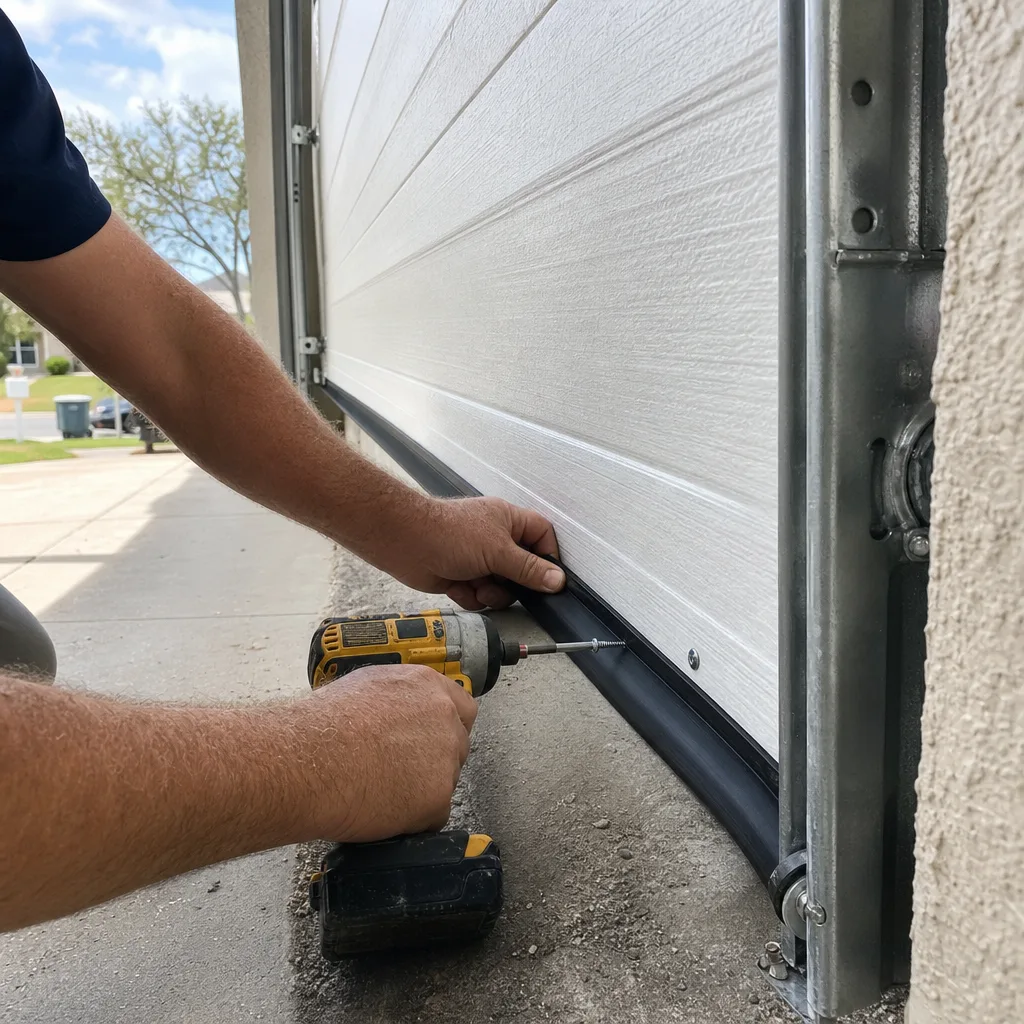
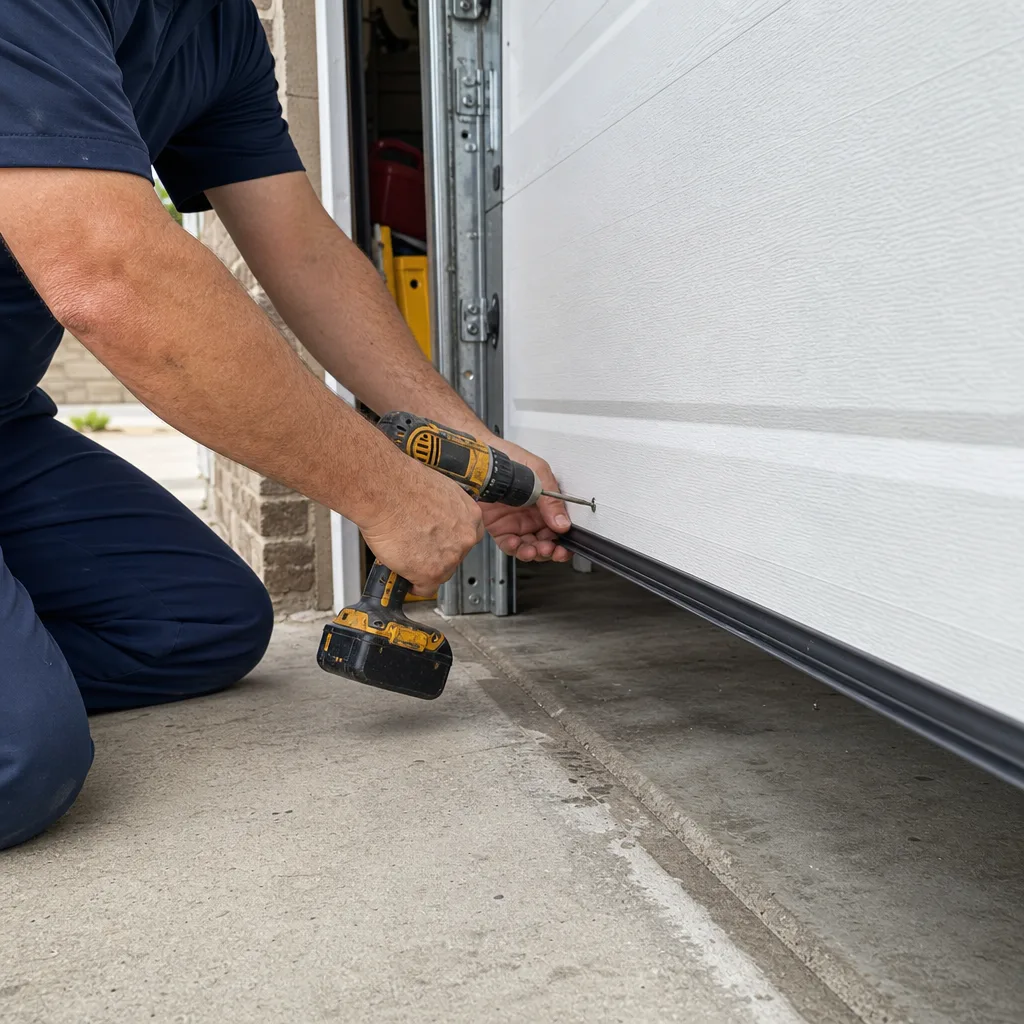
Weatherstripping on the bottom of the door that has cracked, flattened, or pulled away from the retainer doesn’t affect operation, but it lets rain, dust, and bugs into the garage. In Brandon, this strip also serves as the first line of defense against the afternoon downpour that blows horizontally against the door. A failed strip is a $25 part and a 30-minute job. There’s a helpful guide to checking the door and its components before deciding on bigger work on our Garage Door Installation in Brandon page.
What Specific Noises Mean: A Noise Diagnostic Guide
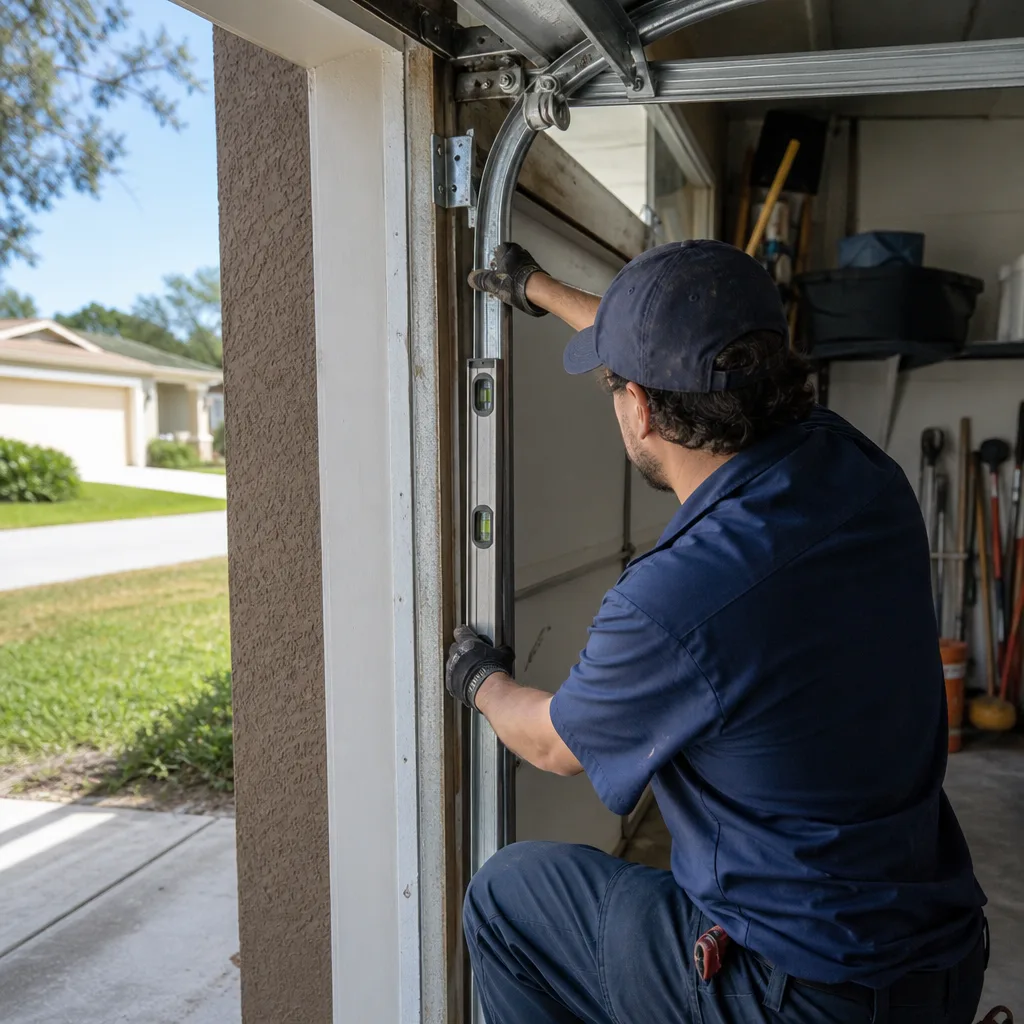
Noise is the warning sign homeowners report most, and it’s the one most commonly described in words that don’t help a technician. “It sounds bad” means something different to everyone. Here’s what each specific noise pattern indicates, in the vocabulary a technician will use when they arrive.
- Popping or snapping sound when the door moves. This is usually a torsion spring that has rusted or developed a small crack and is catching on itself as it winds and unwinds. You may hear it as a series of sharp ticks, especially when the door is in the first few feet of travel. A spring making this sound is approaching failure. Treat it as a watch-closely item that should become a service call within a week or two. Spring replacement: $180 to $340.
- Grinding or metal-on-metal scraping. Usually a roller that has lost its bearing or flattened, now running steel-on-steel inside the track. If the sound comes from one side, you can often see the telltale metal flakes collecting on the track below the roller. If it comes from both sides, all rollers are near end of life. Roller replacement: $90 to $180.
- Squealing that starts when the door begins moving and stops when it stops. This is typically a dry bearing at the torsion spring end plate or a roller bearing that has lost grease. In Brandon’s humidity, bearings lose lubricant faster than in dry climates because the water pulls the lubricant out of the race. A technician can repack or replace the bearing for $110 to $190.
- Loud bang when the door starts moving. This is almost always a spring. A spring that breaks while the door is closed will snap audibly, and the door won’t move afterward no matter what the opener does. It sounds like a firecracker or a backfiring car. If you hear this, stop using the door and treat it as an emergency. The good news in Brandon is that most companies, including ours, keep springs on the truck and can usually get you operational same day.
- Rhythmic thumping as the door travels. A flat spot on a roller, a bent roller shaft, or a door section that has warped slightly from humidity and now rubs the track at one point in its travel. You can often tell which section is involved by standing inside and watching the gap between door and track as the noise occurs. Depending on what’s causing it, repair runs $110 to $250.
One pattern worth naming specifically: a sound that changes with the weather is almost always humidity-related. A door that’s quiet in January and grinding in August is not imagining things. The metal track expands in heat, and wooden or composite sections swell in humidity, closing the clearance that the rollers need. This annual pattern is common in Brandon, and it’s one reason the first-time customer call volume starts rising in May.
How Brandon’s Climate Accelerates Specific Failures
Brandon sits far enough inland that we don’t get the salt air of St. Petersburg or Bradenton, but we get everything else: six months of high humidity, heavy afternoon rain, and a hurricane season that sends wind gusts hard against garage doors that are already the largest moving object on most houses. Those conditions change which parts fail first and how fast.
Cable corrosion near the drum shows up earlier here than in the northern states or the dry Southwest. The cable drum at each end of the torsion shaft is where the cable wraps as the door opens, and in Brandon it is constantly exposed to warm, humid air. If the garage is not climate controlled, condensation forms on the metal, and the cable wicks moisture into the strands. Over two or three seasons, rust grows inside the cable where you can’t see it until the strands start to separate. This is one reason we photograph the cable drum assembly on every Garage Door Repair in Brandon visit. A cable that fails under load drops the door, and the failure often surprises a homeowner who had no visible warning.
Bottom-section roller wear is the second Brandon-specific failure. The bottom section of the door sits in the dampest part of the garage, at floor level where storm water splashes in and humidity pools. Rollers on this section rust and wear faster than the ones at the top, and when a bottom roller seizes, it drags the bottom section crooked, which then stresses the bottom bracket. That’s the part that breaks first when force isn’t controlled. A technician who works in Brandon sees this chain often enough that bottom-roller and bottom-bracket inspections are standard on any maintenance visit here.
Track rust and pitting is the third pattern. Galvanized track resists rust, but it still develops pitting after enough exposure to warm, moist air. Pitted track is abrasive to rollers, and once the track surface roughens, it wears rollers faster, which scores the track more, which wears the next set of rollers faster. This feedback loop is why a garage door that was installed in 2015 in Brandon may need track and roller attention at the ten-year mark, where the same door in Denver might go fifteen. If you see orange speckling on the inside of the track, you’re seeing the beginning of the cycle.
What This Means for Your Maintenance Calendar
In Brandon, the highest-value maintenance you can do is annual, not sporadic. Once a year, in the spring before the rainy season starts, inspect the bottom section, the cables where they wrap around the drum, and the track where the bottom rollers sit. This 15-minute check catches most of the failures that turn into emergency calls in August. You can do it yourself. If you find something concerning, photograph it before you call: a technician can usually give you a working diagnosis from a photo of a rusted cable or scored track, and that gets you from “call and hope” to “call and know” before the tech even arrives.
What to Document Before Calling a Technician
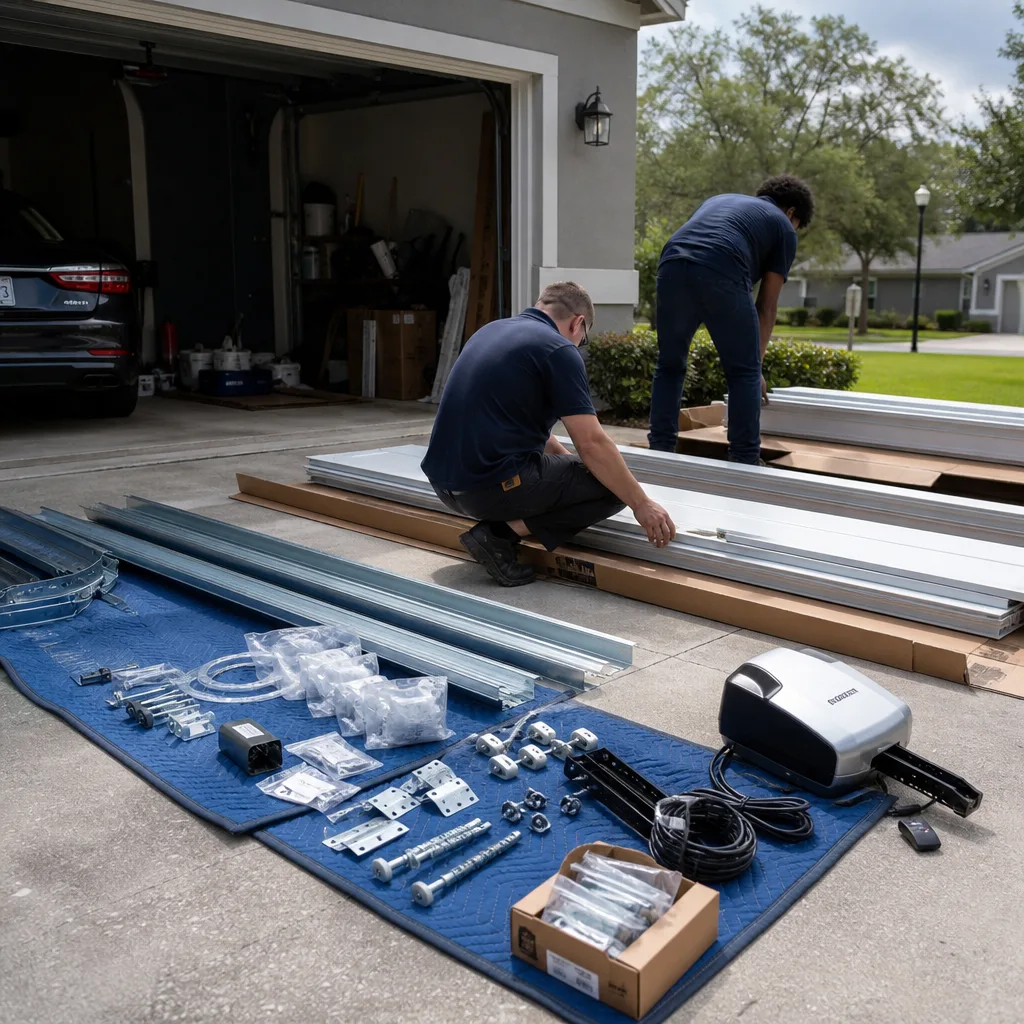
The most useful thing you can do before calling any garage door company in Brandon is to write down the same details a technician would note, a process we cover in our How to Hire a Garage Door Contractor in Brandon guide. This isn’t busywork; it’s the difference between a technician who arrives knowing what to look for and one who has to start from zero. Here’s what to capture, in the order it matters for diagnosis.
- The specific behavior, stated mechanically. Not “it’s acting weird” but “the door reverses halfway down, every time, with nothing in the path.” Not “it’s noisy” but “it makes a popping sound during the first two feet of travel upward, then goes quiet.” The precision tells the technician which component to inspect first.
- When it started. “It started Tuesday after the storm” means something different from “it’s been doing this for six months.” Sudden onset after weather points to water ingress, surge damage, or wind loads. Gradual onset points to wear.
- Whether it’s consistent or intermittent. A limit switch that has drifted fails consistently. A logic board with humidity damage fails intermittently. Every diagnostic tree branches on that distinction, and if you can state it confidently when you call, the technician can bring the right parts on the first trip.
- What position the door is in when it happens. Reversing on the way down is one set of causes. Jerking on the way up is another. If the problem happens in both directions, that’s a third category. State it.
- Photos of anything visible. A photo of a rusted cable, a scored track, a cracked roller, or a misaligned sensor is worth more than a paragraph of description. This is the same principle we apply in reverse: a documented photo record comes with every Servo visit because a photograph settles disagreements about what was found. Clause 4 of The Haven Standard exists because a picture of the failed part is more persuasive than any description of it. Your photo does the same work when you call us.
None of this takes more than five minutes. It’s the difference between a service call and a diagnostic trip. And because we offer a free second opinion on any written estimate from another company, that documentation also turns a comparison into a solved problem: bring the paperwork, the photos, and the timeline, and the answer becomes clear quickly.
Cost-to-Repair Reference for Brandon
Here’s the price table that most guides won’t show. These are Brandon-market ranges for common garage door repairs, gathered from the work we’ve done across the area since 2015. They’re ranges, not quotes: a written price on your specific door requires seeing the door, the parts, and the failure, which is what we do before quoting anything.
| Warning Sign | Likely Component | Brandon Repair Range | Urgency |
|---|---|---|---|
| Loud bang, door won’t move | Torsion spring (snapped) | $180 - $340 | Immediate |
| Frayed or rusted cable | Lift cable | $150 - $280 | Immediate |
| Cracked bottom bracket | Bottom bracket assembly | $120 - $220 | Immediate |
| Door hanging unevenly | Cable or spring | $100 - $400 | Immediate |
| Grinding noise | Rollers | $90 - $180 | Schedule |
| Popping or snapping while moving | Torsion spring (cracked) | $180 - $340 | Schedule within 1-2 weeks |
| Door reverses halfway down | Track, spring, or logic board | $95 - $300 | Schedule |
| Intermittent remote failure | Logic board or limit switch | $100 - $320 | Schedule |
| Squealing | Bearing or roller | $110 - $190 | Schedule |
| Weatherstripping cracked or missing | Bottom seal | $25 - $60 | Optional |
Every price on that table reflects the same standard: flat, written, and agreed before any work begins. We don’t quote by the hour and settle at the end. We quote the repair, write the scope, and do exactly what the paper says. If the scope changes because the technician finds something else, the price changes only after you see the photo of the new finding and agree to the new written price. This is the entire point of Clause 1 of The Haven Standard, and it’s why we built Servo Garage Doors this way in 2015.
Common Mistakes to Avoid
- Ignoring a popping spring because the door still works. A cracked spring can hold tension for weeks, but it will fail, and it usually fails when the door is up and the car is underneath it. The repair costs the same whether you catch it early or late. The collateral damage doesn’t.
- Lubricating a noisy door with the wrong product. WD-40 is a solvent, not a lubricant. It strips the grease from bearings and makes the noise worse in two weeks. If you’re going to lubricate, use a garage door-rated silicone or lithium spray, and only on hinges and rollers, never on the spring or cable.
- Adjusting the opener force settings to “fix” a door that binds. A door that’s binding because of a worn roller or a bent track doesn’t get better when the opener pushes harder. It gets a stressed opener, a damaged gear, and eventually a bill for both the mechanical fix and an opener part. The mechanical problem comes first.
- Deferring maintenance because hurricane season is “months away.” In Brandon, the worst time to discover a weak spring or a rusted cable is when you’re trying to button the house up as a storm approaches and every garage door company has a three-day queue. Check the door in the spring, before storm prep joins the list.
- Calling for pricing without documenting what you’re seeing. “My garage door is broken, how much does that cost” gets a range. “My garage door makes a popping sound in the first two feet of upward travel, started after last week’s storm, and it’s consistent” gets an answer that’s close enough to plan around. The phone call is shorter and more useful for both sides.
- Replacing the opener when the door is the problem. We see this at least once a month in Brandon: a homeowner replaces a working opener because the door was heavy, noisy, or reversing, and the opener was never at fault. A manual test costs nothing and takes two minutes. Disconnect the opener and operate the door by hand. If it’s heavy or binds, the problem is the door, not the opener.
When to Call a Professional
Call a professional when the warning sign involves a component under tension: torsion springs, lift cables, or bottom brackets. Call when the door has come off the track, when it hangs unevenly, or when you’ve heard a loud bang and the door no longer moves. Call when you’ve tested the easy things – sensor lenses, remote batteries, the manual operation test – and the problem persists. And call when the warning sign is one you’ve documented but can’t confidently diagnose: that’s what the documentation is for. Servo Garage Doors Brandon offers free estimates across Brandon – call (656) 216-3212. A real person answers, day or night, and if you call with your documentation in hand, expect the conversation to be short and specific.
Frequently Asked Questions
Garage door spring replacement in Brandon typically costs $180 to $340 for a standard residential torsion spring, depending on the door’s weight and the spring’s wire size. Replacing both springs at once is standard practice because the second spring usually fails within 90 days of the first, and the per-spring cost is lower when both are done in one visit. Call (656) 216-3212 for a written price on your specific door – estimates are free, and the price you’re quoted is the price you pay before any work starts.
Yes, in most cases. Snapped springs, broken cables, and off-track doors are repairs we carry parts for on the truck, and a technician can usually reach you in Brandon the same day you call, including evenings and weekends. The 24-hour live line is (656) 216-3212. If your repair requires a part we don’t stock, we’ll tell you on the first call, not after a wasted trip.
No, the written price you’re quoted before work starts is the price you pay, per Clause 1 of The Haven Standard. If the technician finds something additional that needs attention, you’ll see a photo of the new finding before any new price is discussed, and you’ll approve that price in writing before any new work begins. That’s the entire system Servo Garage Doors has run since 2015.
Torsion spring failure, followed closely by bottom-section roller wear. The humidity and temperature swings in Brandon accelerate both: springs rust and crack faster in moist air, and bottom rollers sit in the dampest part of the garage, where condensation and storm splash shorten their life. If your door is making a popping sound and it’s been more than five years since the springs were replaced, that’s the likely next repair on your timeline.
Yes. We service all major brands including Genie, Clopay, Amarr, Wayne Dalton, LiftMaster, Chamberlain, and Craftsman. The repair path is the same regardless of brand: find the failed part, photograph it, quote a written price, and do the work. Your door’s brand doesn’t change how we document what we found, and it doesn’t change the price-first rule.
A noisy door that still operates is a wear warning, not an immediate danger, with one exception: a popping or snapping sound from the spring area means the spring is cracked and moving toward failure. That one should be addressed within a week or two. Other noises, like grinding from rollers or squealing from bearings, can be scheduled without urgency but shouldn’t be ignored indefinitely, because worn rollers damage track and turn a $140 repair into a $400 one. Call (656) 216-3212 and tell us what the noise sounds like - the call takes two minutes and you’ll know whether to schedule or stop using the door.
The Bottom Line
Every warning sign on a garage door points to a specific component, and that component has a specific repair cost. You can learn to connect the sound, the behavior, and the climate patterns in Brandon to make better decisions about what’s urgent and what can wait. A popping spring is a one-to-two-week item; a snapped spring is a today item. A grinding roller is a schedule-it item; a frayed cable is a stop-using-the-door item. The more precisely you can describe what’s happening, the faster and cheaper the fix becomes. That’s the same approach we bring to every job, and you can find more guides & resources on our blog to help you name the part, show the evidence, quote the written price, and document the work. No urgency theatre, no vague promises. Just the paper trail.
Written by Marcus Deller, Owner at Servo Garage Doors Brandon, serving Brandon since 2015.