
Last updated September 20, 2026
Full 25-point door and opener safety check with every visit - springs, cables, rollers, tracks, and your LiftMaster or Chamberlain opener included
You get a price before we start. It does not change when the truck arrives.

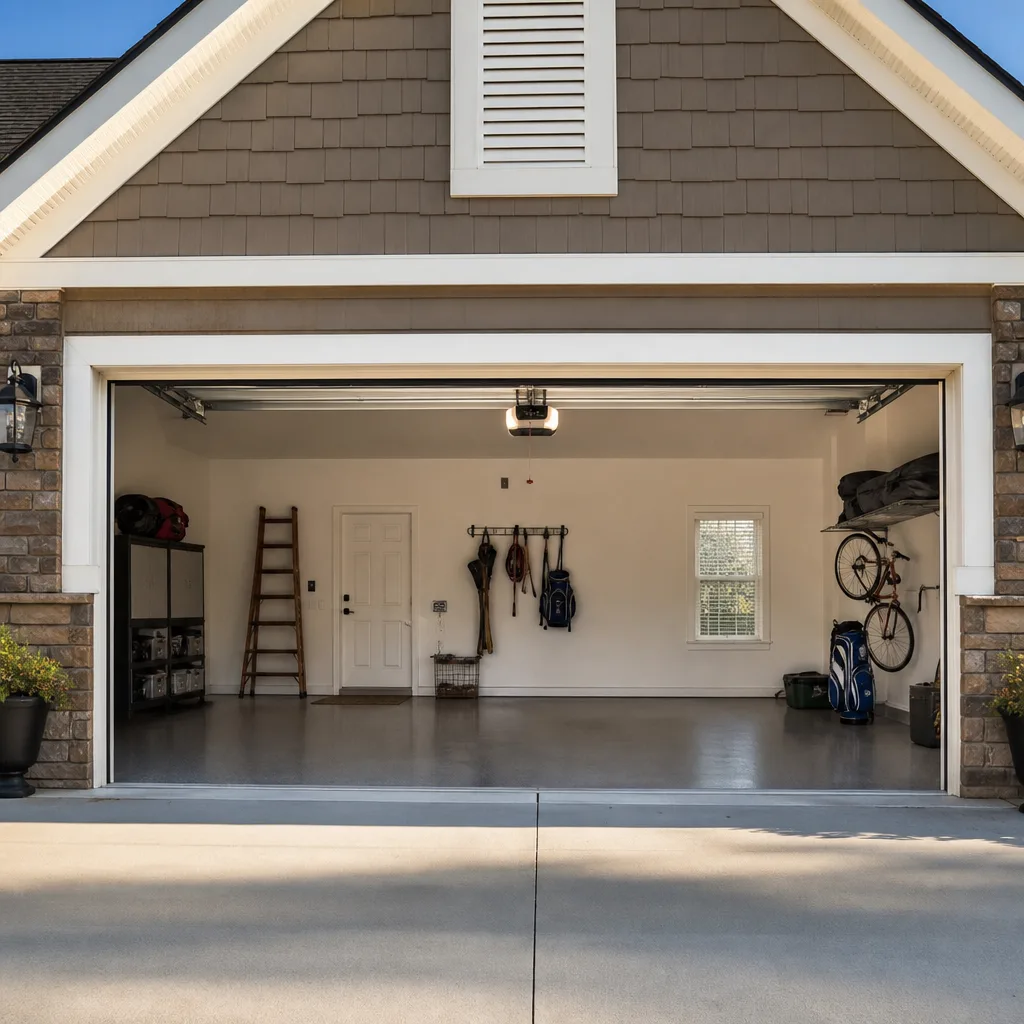
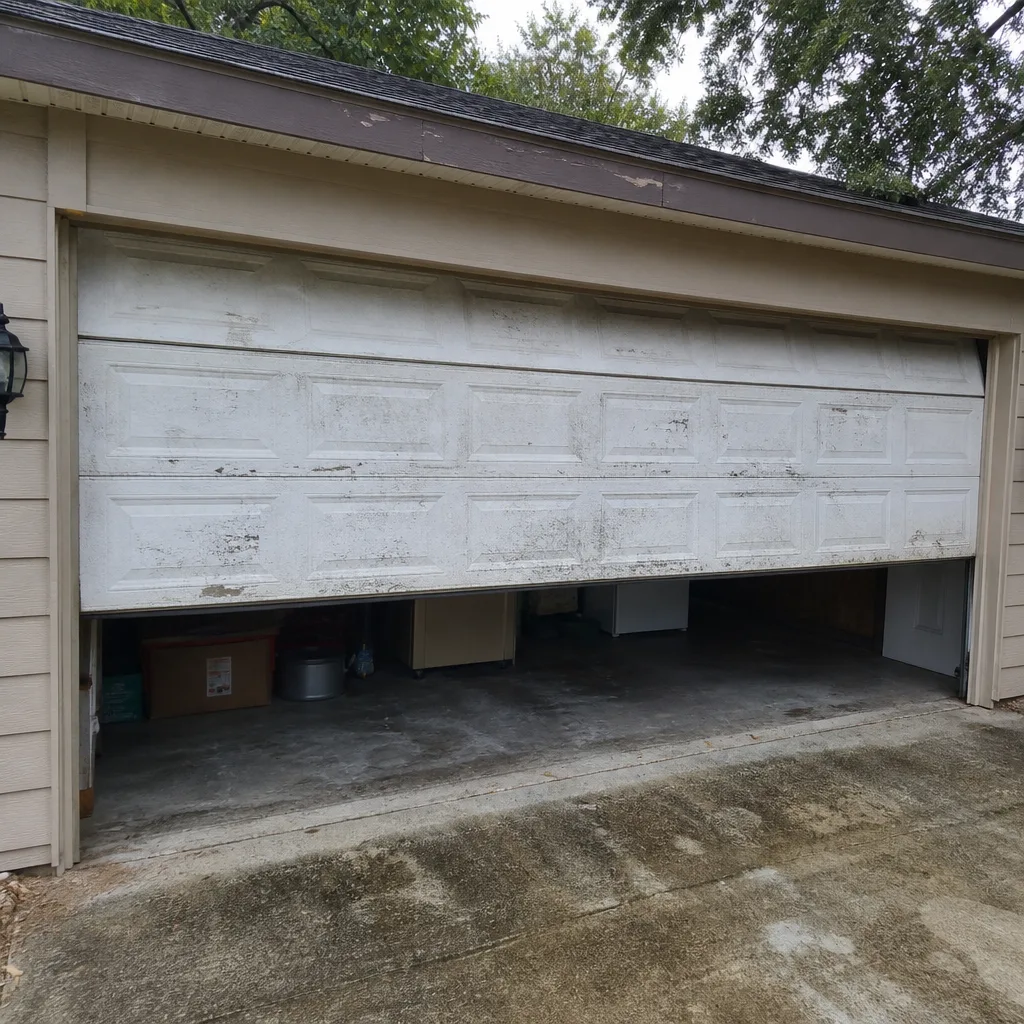 Before
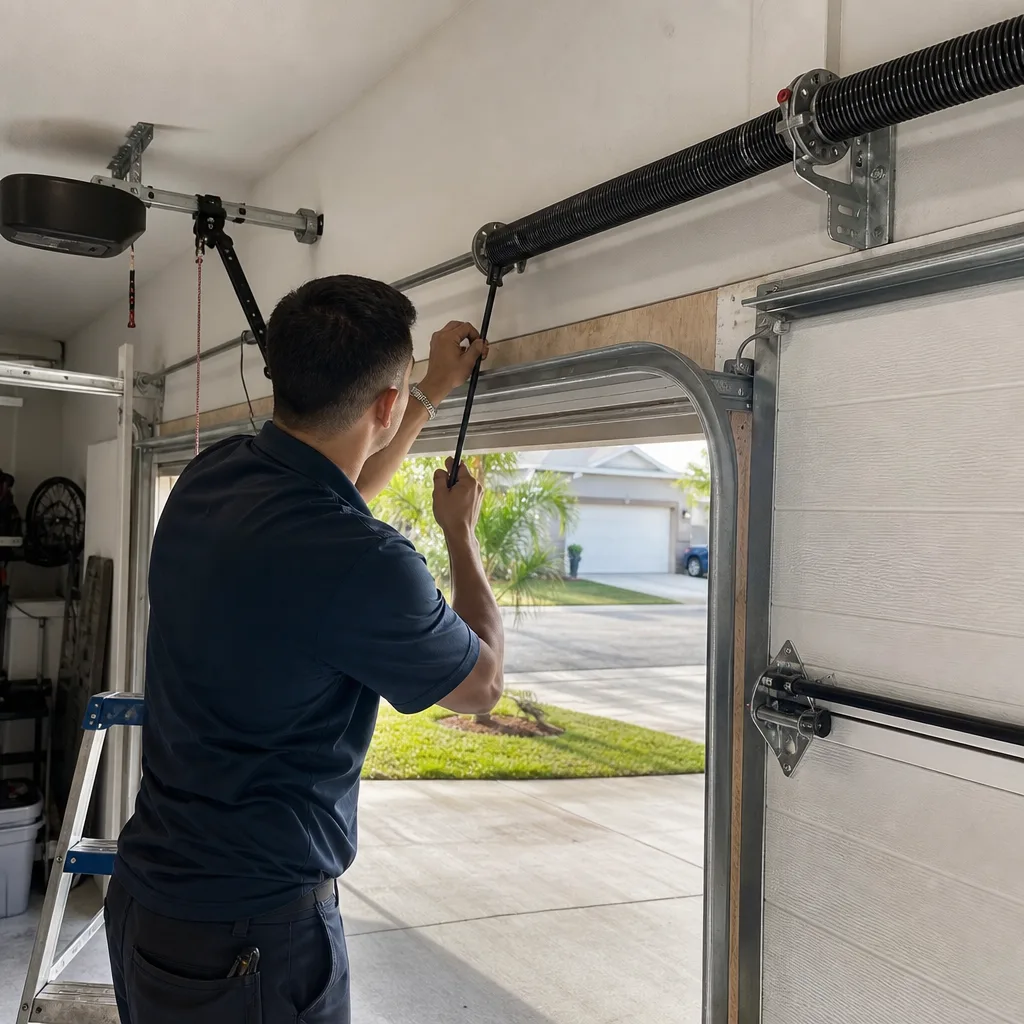 After
After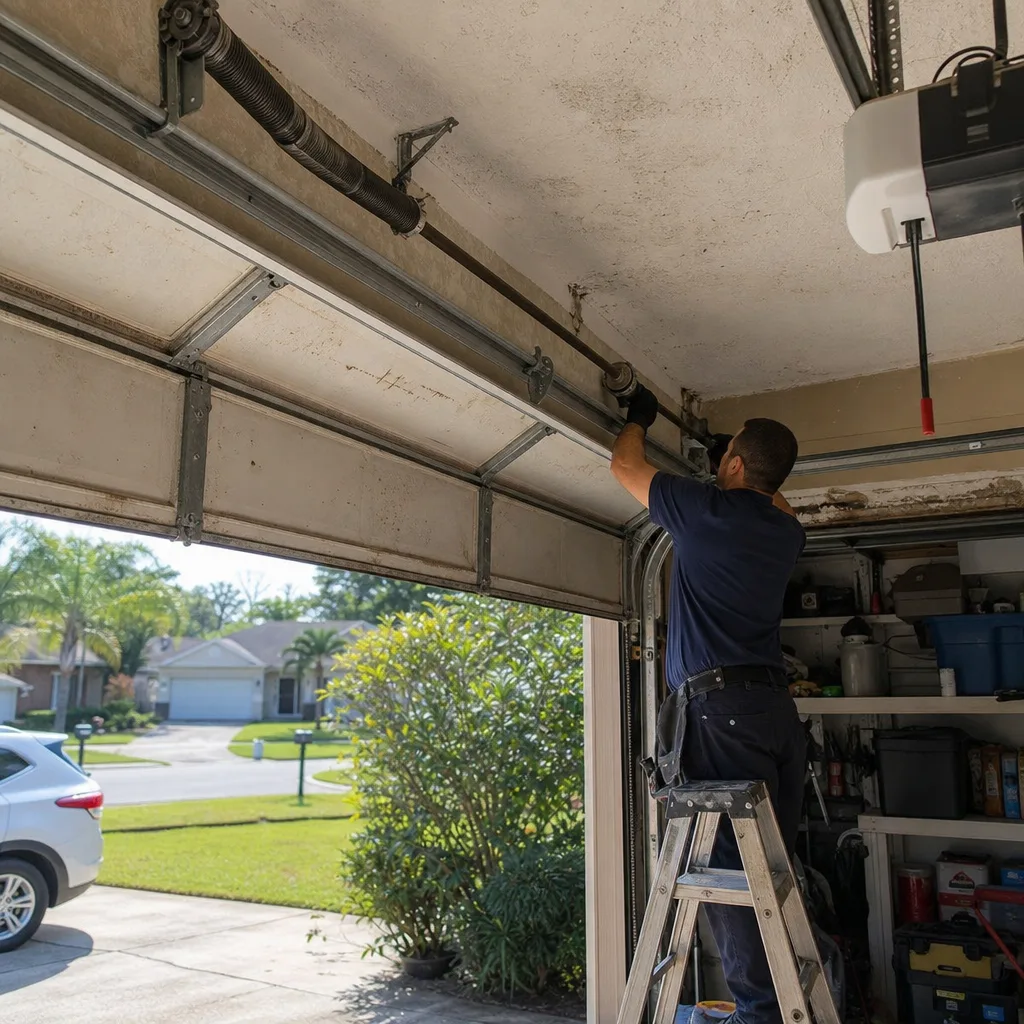 Before
 After
After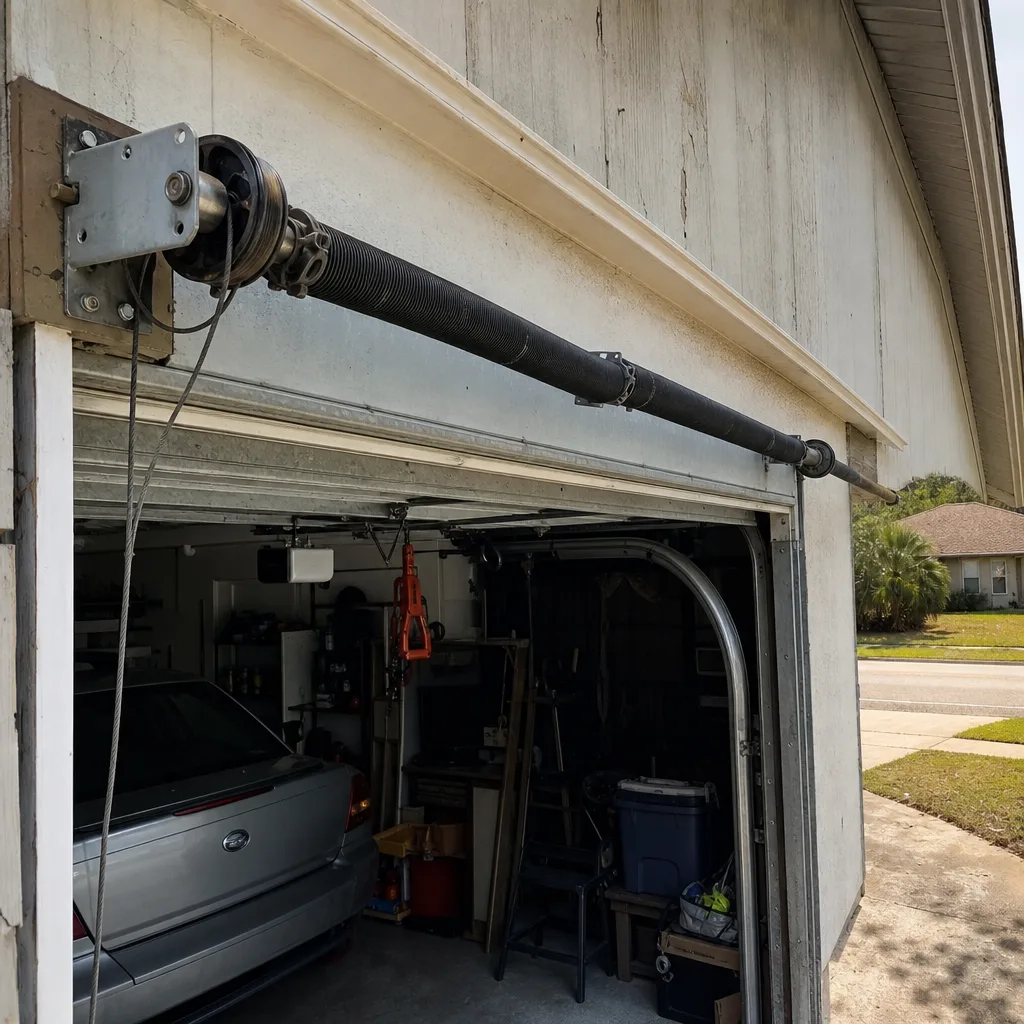 Before
 After
AfterSeasonal Garage Door Care for Brandon: Year-Round Homeowner’s Guide
Most garage door maintenance guides are written for places with snow, frost heave, and road salt. Brandon doesn’t have any of that. What we do have is six months of 90-percent humidity, an afternoon thunderstorm pattern that arrives with almost comedic punctuality, and a dry season that exposes every bit of corrosion the wet months left behind. The result: seasonal advice written for Ohio or New York quietly fails here because it targets the wrong failure modes. This guide maps garage door maintenance to Brandon’s actual climate calendar. You’ll learn what to check in December that saves you a spring repair bill, how hurricane prep differs from routine lubrication, and why your door that worked perfectly in February may bind by August. For more guides & resources, see our blog.
Quick Answer
The most effective seasonal garage door care in Brandon, FL is built around two windows: a dry-season inspection from November through February that surfaces rust and fatigue left by summer humidity, and a May-June storm-prep sequence that covers brackets, balance testing, and manual-operation verification. A homeowner can handle lubrication, visual cable checks, and track cleaning in about 30 minutes quarterly, but spring calibration and opener diagnostics are best left to a technician with a torque wrench and a photo record. See DIY vs Professional Garage Door: The Brandon Homeowner’s Decision Guide for help deciding which tasks to tackle yourself. Skip the spring-only maintenance habit; in Brandon, the November inspection window does more preventive work than any temperate-climate checklist.
Table of Contents
- Why Brandon’s Climate Warrants Its Own Maintenance Calendar
- What Wet Season Humidity Does to Your Door and Hardware
- The Dry Season Inspection Window: November Through February
- Hurricane Season Prep: Beyond the Standard Maintenance Checklist
- How Brandon’s Daily Temperature Swings Stress Opener Electronics
- A Month-by-Month Task Calendar for Brandon Homeowners
- Common Mistakes to Avoid
- When to Call a Professional
- Frequently Asked Questions
- The Bottom Line
BeforeAfterWhy Brandon’s Climate Warrants Its Own Maintenance Calendar
Brandon sits far enough inland that the afternoon sea breeze arrives midafternoon rather than midmorning, which means garage interiors spend the hottest part of the day baking before any relief moves through. Humidity routinely exceeds 90 percent from June through September. Then, starting around late October, the pattern shifts: lower humidity, cooler nights, and a stretch of weeks where the dew point drops low enough that metal stops sweating. If you’ve lived here through two summers, you know the rhythm. Your garage door lives in it too.
The national seasonal template assumes four distinct seasons and schedules maintenance around freeze-thaw cycles. In Brandon, the real stress calendar runs differently. Wet-season humidity penetrates roller bearings, accelerates rust on torsion springs, swells wood-frame door sections if you have them, and causes galvanic corrosion where steel hardware meets aluminum tracks. Then the dry season arrives and the moisture evaporates, leaving behind oxidation that accumulates year over year. The components that fail in August usually started degrading the previous November. That’s why the garage door repair pattern in Brandon skews late summer and early fall: it’s when corrosion that formed months earlier finally exceeds the mechanical tolerance of the system. A December inspection catches that progression early, which is exactly when intervention costs the least.
We see this repeatedly: homeowners who schedule a maintenance visit in January rarely need a repair visit in September. Those who wait until the door misbehaves are paying for a repair plus the maintenance they skipped. The calendar in this guide is built around that observation, and it is specific to Brandon’s climate, not a generic template with the city name swapped in.
Quick Answer
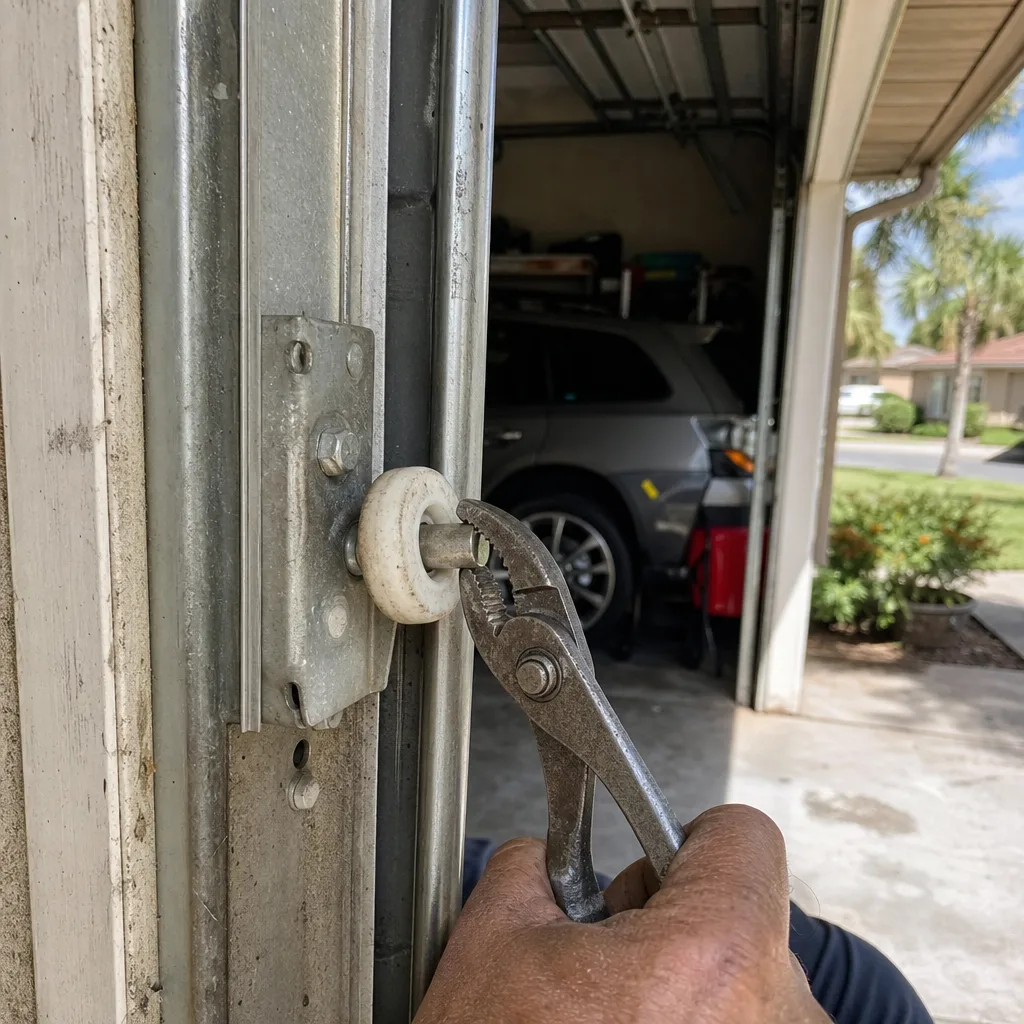
For a garage door that runs reliably year-round in Brandon, inspect and lubricate quarterly, do a full hardware check each November when low humidity reveals corrosion, and complete storm-prep tasks before June 1. Budget 30 minutes per quarter for DIY tasks and one professional inspection annually. If your door binds in August, the root cause is usually humidity-driven spring and bearing wear, not temperature alone. For a detailed cost overview, see our Garage Door Cost Breakdown: The Brandon Homeowner’s Reference for 2026.
What Wet Season Humidity Does to Your Door and Hardware
The wet season in Brandon, roughly June through October, doesn’t just make the air heavy. It changes the mechanical behavior of your garage door. Corrosion isn’t the only issue, and for many doors it isn’t even the first issue you’ll notice. The more immediate effect is binding.
Torsion springs, the coiled steel springs mounted above the door opening, are calibrated to counterbalance a specific door weight. When humidity saturates the air, untreated steel springs and hardware develop a fine oxide layer that increases surface friction at the coil points. Simultaneously, nylon rollers absorb ambient moisture and swell slightly, creating more rolling resistance. The track, especially where it passes through the wall near the garage interior, can grow a thin rust bloom that grabs the roller wheels. The combined effect: a door that lifted smoothly in February starts hesitating, jerking, or stopping halfway up the track in August. The motor has not changed; the door’s mechanical resistance has. When an opener strains against increased resistance, the logic board runs hotter, the gear teeth wear faster, and the travel limits drift. A door that binds is an opener that is working against a load it wasn’t calibrated for.
Springs also degrade faster in sustained humidity. Standard galvanized springs resist rust better than uncoated steel, but most doors in Brandon homes built between 2015 and 2025 came with oil-tempered springs that rely on a surface oil film for protection. That film breaks down unevenly in high-humidity cycles, and rust pits form at stress concentration points. A rust pit on a spring coil is a failure waiting for a load spike, like the day you open the door six times instead of two because a plumber is coming and deliveries are scheduled.
What to do about it: lubricate moving parts monthly during the wet season with a garage door-specific spray lubricant, not WD-40. WD-40 is a solvent, not a long-term lubricant, and it strips the protective film from springs. Use a lithium-based or silicone spray on the torsion spring coils, hinges, and roller stems, and wipe the tracks clean with a dry cloth. Do not lubricate the track itself; the rollers need traction, and a greased track collects grit that acts like sandpaper on nylon wheels. If you notice rust bloom on the tracks, clean it with steel wool and check for pitting. Pitting that catches a fingernail means the track needs replacement, not cleaning.
Wood-frame doors, common in Brandon’s 1970s and 1980s neighborhoods around Bryan Road and Lumsden, absorb moisture and swell. If your wood door sticks only during the wet season and frees up after a week of low humidity, the panels are swelling. The fix is usually a sealant or paint on the panel edges, not a spring adjustment, though you’ll want a technician to verify the balance anyway before adjusting anything.
The Dry Season Inspection Window: November Through February
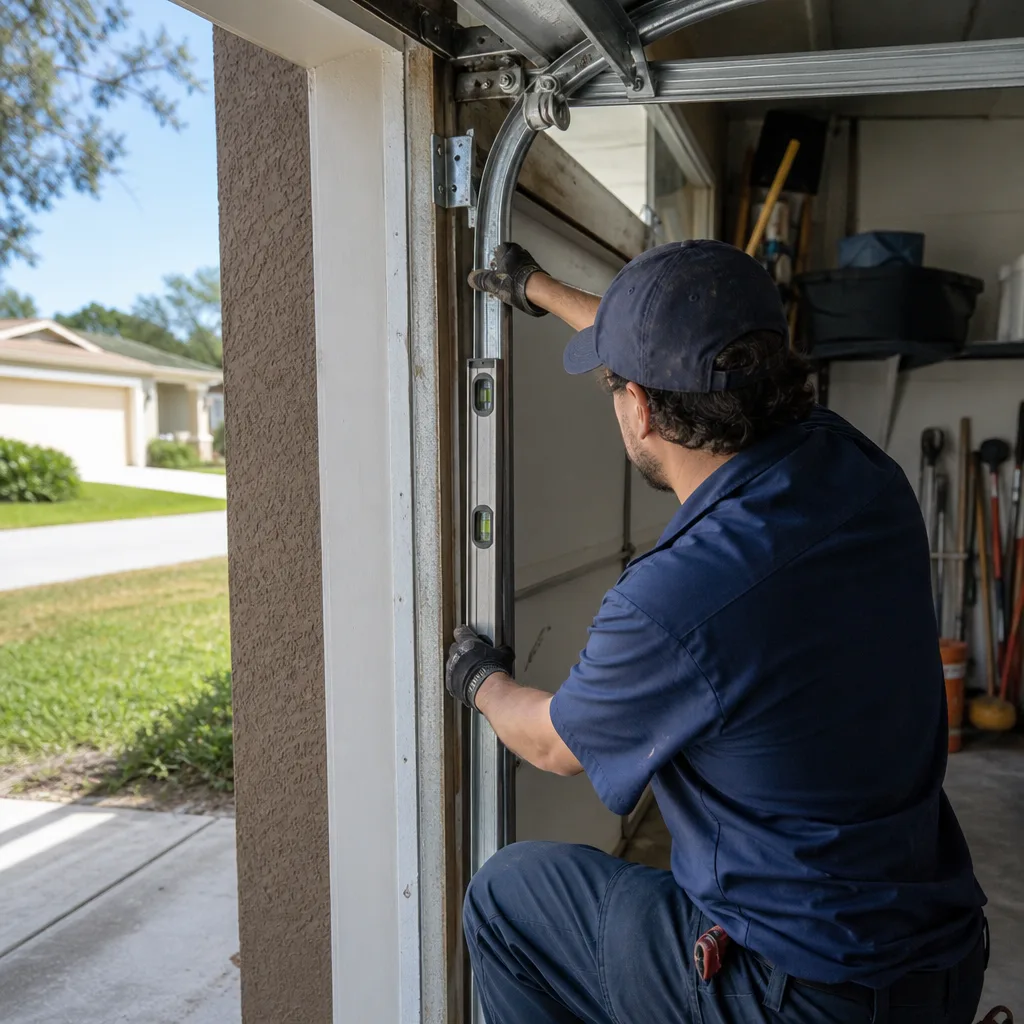
Here’s the counterintuitive part, and it’s worth stating plainly: the best time to inspect a Brandon garage door is not spring. It’s the dry season, November through February, when the humidity drops and the metal stops sweating. That’s when corrosion from the previous six months is most visible and before it has another wet season to progress. Wait until March or April, as most national guides advise, and you’re already months behind.
A methodical dry-season inspection takes about 30 minutes and follows a set order: cables, springs, rollers, tracks, balance. Here is the sequence we use when we walk a door in Brandon:
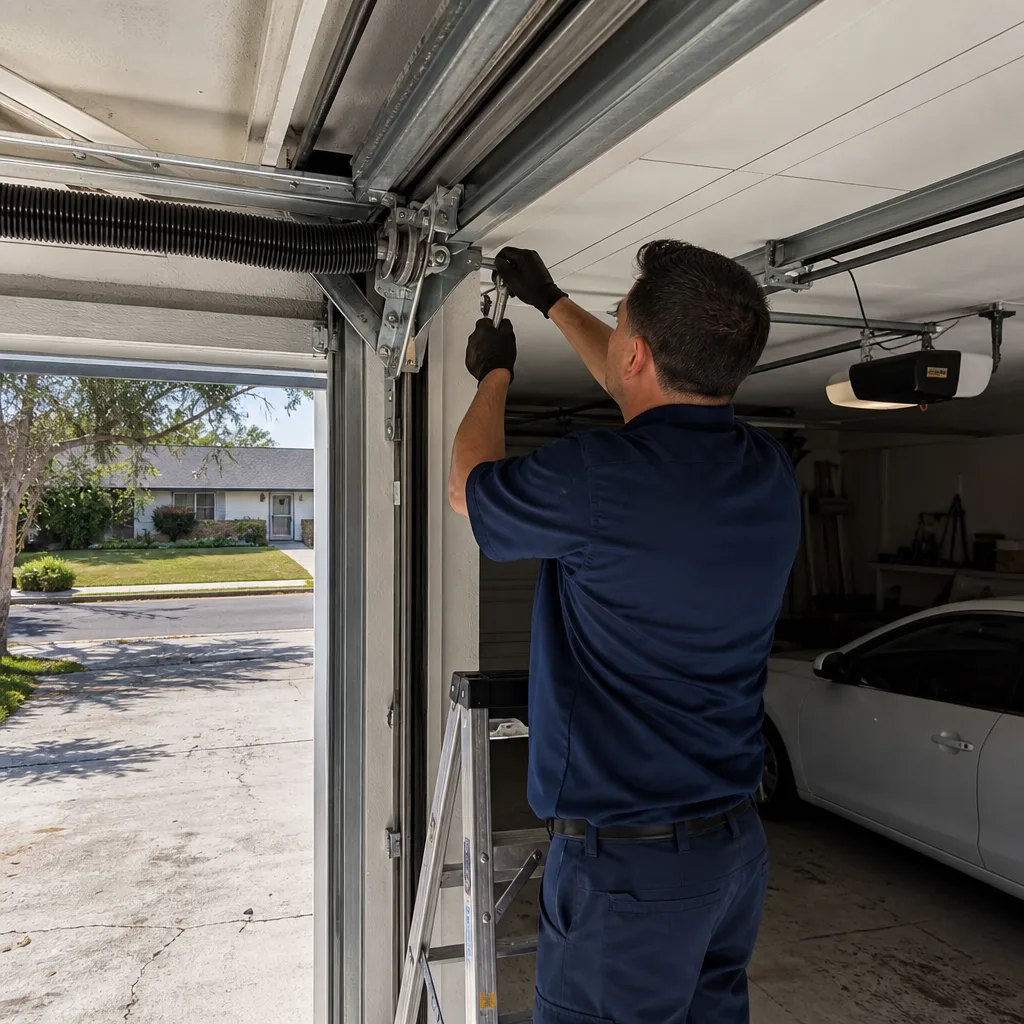
- Cables: Look at the lift cables that run along each side of the door from the bottom bracket to the drum above. Check for fraying, especially near the bottom bracket where the cable makes a tight radius turn. A single broken strand means the cable is near failure. Do not attempt to replace a lift cable yourself; under tension, these cables can cause serious injury when they release. We recommend a trained technician for any cable replacement.
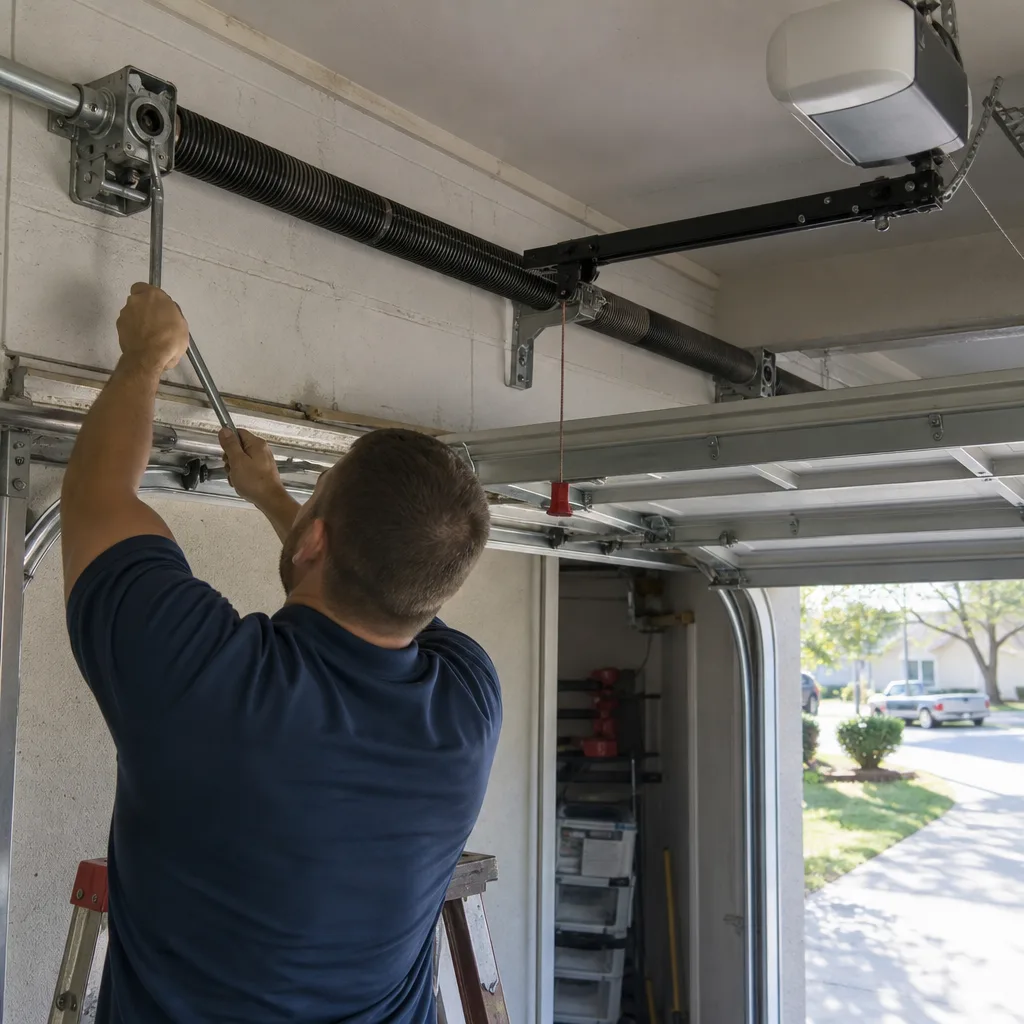
- Torsion springs: Check the spring mounted above the door for rust bloom, especially at the coil gaps. Uniform surface rust is cosmetic. Pitting, flaking, or a visible gap where the spring should be continuous means replacement. Springs in Brandon’s humid environment typically last 7 to 9 years; if yours is older, replace it on your schedule, not on the spring’s schedule.
- Rollers: Look at the roller wheels in the track. Check for flat spots, cracked nylon, or wobble. A roller that doesn’t turn freely is adding load to the opener. Replace the full set if more than two are worn, since partial replacement creates uneven wear on the new rollers.
- Tracks: Wipe the interior track surfaces with a dry cloth and check for rust bloom, particularly at the bottom curve where moisture collects. Check the track bolts with a wrench; a loose track shifts the door’s travel path and creates side-load stress on the rollers and hinges.
- Balance test: Pull the manual release handle (with the door closed) and lift the door by hand to waist height. It should stay in place without drifting up or down. If it drops, the springs are under-tensioned and need calibration. If it rises, they’re over-tensioned. Either condition means the opener is working harder than it should, and the springs need professional adjustment. This test takes 20 seconds and tells you more about spring health than any visual inspection.
This is also the right time to schedule a professional inspection from a Brandon garage door company if you don’t want to do the ladder work yourself, or if you found any of the conditions above. The dry-season window is when our technicians can see the full extent of wet-season damage and quote a repair, not an emergency replacement.
Hurricane Season Prep: Beyond the Standard Maintenance Checklist
Atlantic hurricane season runs June 1 through November 30, and Brandon sits far enough inland that the primary risk is wind, not storm surge. That changes the prep priorities. A garage door is the largest opening on most Brandon homes, and if it fails under wind load, the pressure differential can lift the roof. That’s not hyperbole; it’s structural engineering.
Standard hurricane prep for a garage door includes three tasks, and they’re different from routine maintenance:
- Wind-load inspection: Check that the horizontal reinforcement struts are installed and tight. If your door doesn’t have struts and it’s a double-wide (16 feet or wider), consider having them added before peak season. Struts stiffen the door against positive wind pressure, and the cost is reasonable relative to the damage a blown-in door can cause. This is not a DIY addition; the door balance changes when you add strut weight, so springs often need recalibration at the same time.
- Operator disconnect testing: Every opener has a red manual release handle that disconnects the door from the trolley carriage so you can operate it by hand during a power outage. Test it monthly during hurricane season. Pull the handle with the door closed, then manually open and close the door once. It should move smoothly and stay put when you release it at the midpoint. If you can’t lift the door by hand easily, the springs are under-tensioned and you’ll be locked out of manual operation exactly when you need it most.
- Manual operation verification: During a prolonged power outage, you’ll open and close the door manually, possibly multiple times per day. Verify that the door can be operated by hand through its full travel without binding, and that both lock bars (if installed) engage cleanly. A manual door that binds at the midpoint will bind worse when you’re rushing to secure the house before a storm.
If your door has a battery backup unit on the opener, test the battery monthly during hurricane season by unplugging the opener and running a full open-close cycle. Most backup batteries last 1 to 3 years in our heat; a battery that’s older than that may test fine on the indicator light but fail under load. Replace it before June if it’s past its date code. Chamberlain and Genie both offer factory battery backups, and aftermarket units are available; whatever you have, test it the same week you change your smoke detector batteries.
How Brandon’s Daily Temperature Swings Stress Opener Electronics
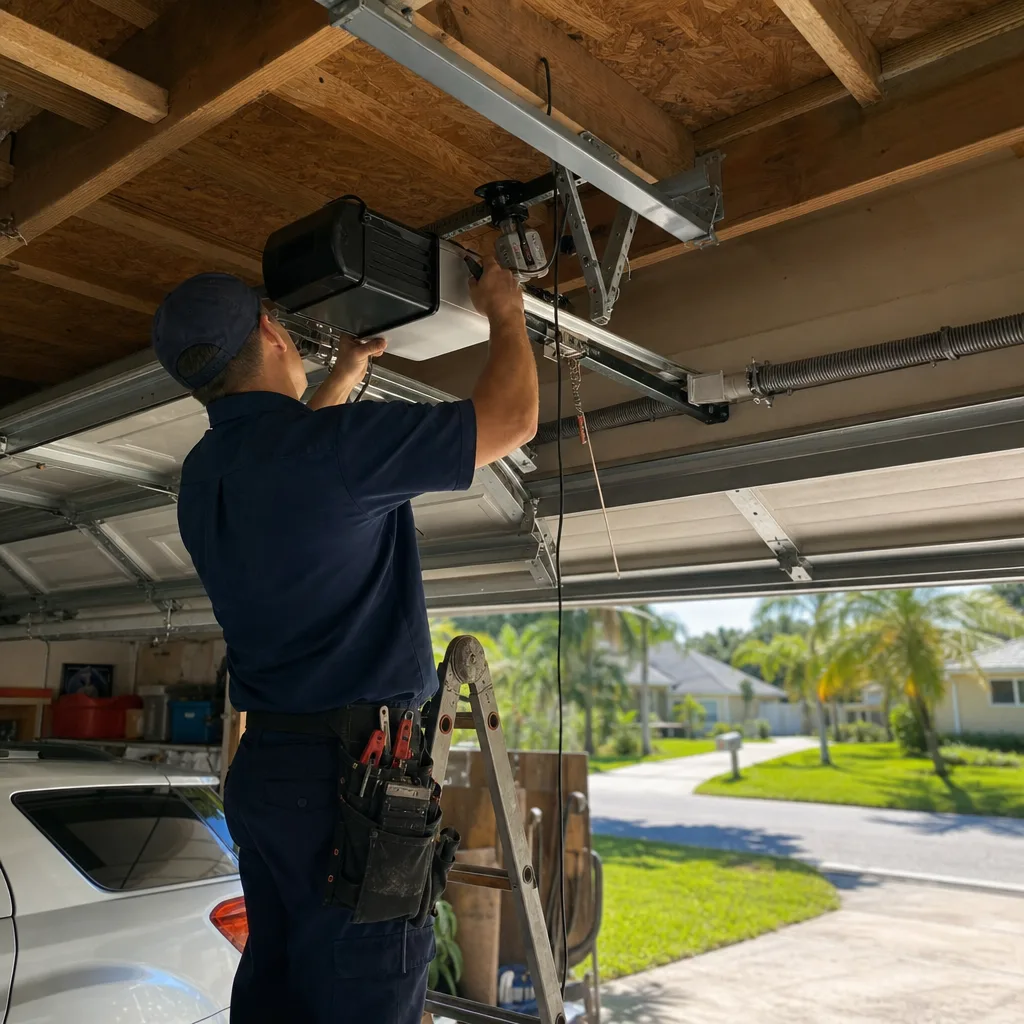
A Brandon garage interior can swing 40 degrees in a single day during the dry season: low 50s before sunrise, mid-80s by afternoon. That daily cycle does two things to opener electronics. First, thermal expansion and contraction stress solder joints on the logic board, the small circuit board that controls travel limits, safety sensors, and remote receiver functions. Over years, repeated thermal cycles create hairline fractures that manifest as intermittent faults: the opener doesn’t respond to the remote on the first press, or the door reverses without reason. Replacing a logic board is rarely economical compared to replacing the opener, unless the opener is under warranty.
Second, heat is the primary enemy of battery backup units. Most residential openers, including popular Chamberlain and Genie models, mount the backup unit on the opener housing near the ceiling, which is the hottest part of the garage. Sustained heat exposure accelerates battery degradation. A backup unit that would last 5 years in a temperate climate may last 2 to 3 in a Brandon garage without ventilation. If your garage has no ridge vent or ceiling fan, consider mounting the backup unit where airflow reaches it, or at least checking it quarterly during the wet season when the heat is most intense.
Opener logic boards also take damage from lightning-induced surges during summer storms. A surge protector at the opener outlet is a $30 fix that can save a $300 logic board. Given the frequency of afternoon thunderstorms in Brandon from June through September, this is one of the highest-value low-cost upgrades available to local homeowners. We see a cluster of opener failures after major storm events every summer, and the common denominator is usually a direct outlet connection with no surge protection.
A Month-by-Month Task Calendar for Brandon Homeowners
Here’s a month-by-month calendar built around Brandon’s actual climate pattern, not a national template. Each month has one primary task plus a quick check that takes under five minutes.
January: Deep clean and document
Humidity is at its lowest. Clean the tracks, wipe down all hardware, and photograph your springs, cables, and rollers for your own records. Six months from now, when something looks different, you’ll have a baseline. If you want a professional baseline inspection, this is the most productive month to schedule it.
February: Lubricate and test balance
Apply lithium spray to the torsion spring coils, hinges, and roller stems. Wipe excess. Perform the manual balance test described above. If the door doesn’t stay at midpoint, have the springs calibrated now, before the wet season adds friction on top of an existing imbalance.
March: Check sealing and weatherstripping
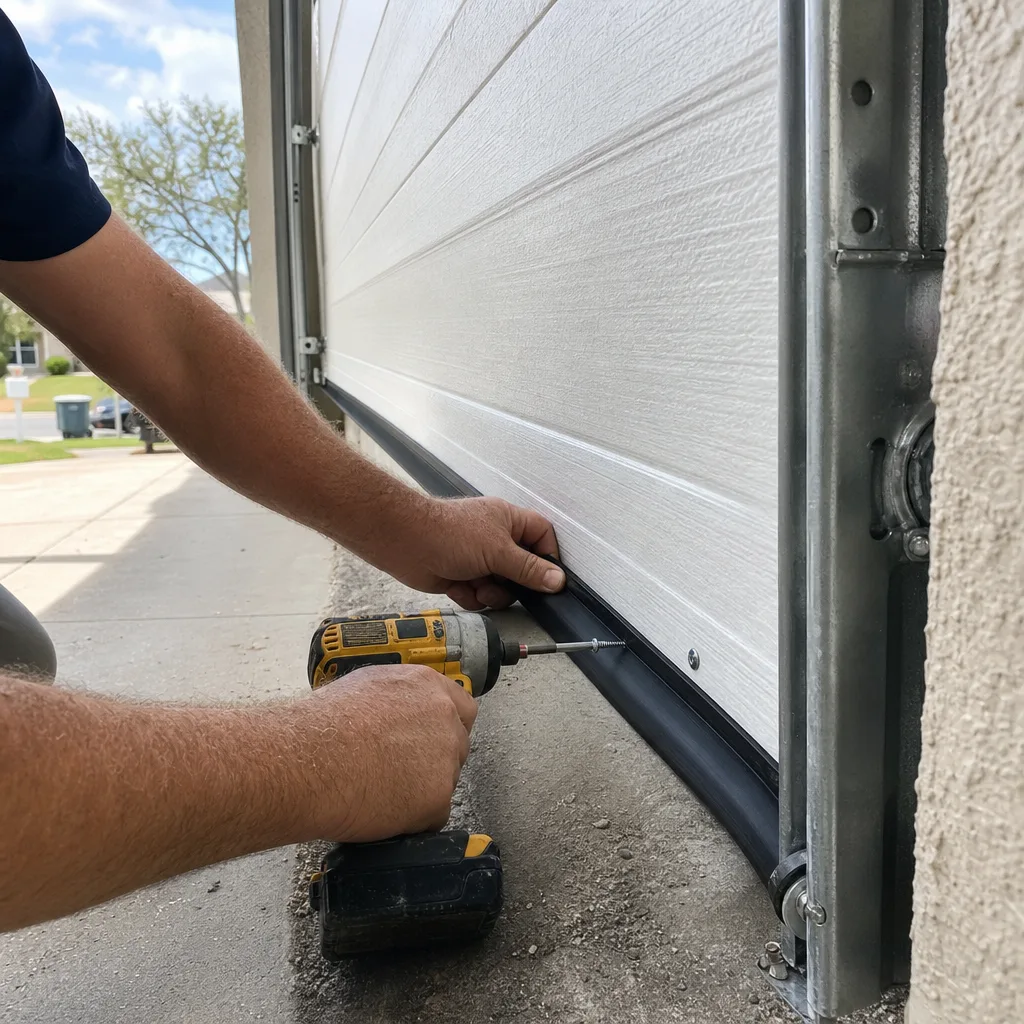
The bottom seal, the vinyl strip that runs along the bottom of the door, cracks and shrinks in our heat. Replace it every 2 to 3 years, and check it in March so you’ll have a clean seal before summer rain. Side weatherstripping on the door jambs keeps dust and insects out during the dry season’s windy afternoons. Check both now.
April: Test the opener’s safety reverse
Place a roll of paper towels under the door and close it. The door should reverse within 2 seconds of contacting the roll. If it doesn’t, the force limits are set too high, and that’s a safety hazard for children and pets. Adjust the limits per the manufacturer’s instructions or have a technician do it.
May: Hurricane prep, part one
Test the manual release and operate the door by hand through its full travel. Check that wind-load struts are present and tight. If your door is double-wide and older than 10 years without struts, get a quote to add them now, before storm season arrives and every installer is booked.
June: Hurricane prep, part two
Verify the battery backup and the surge protector. Confirm the door operates smoothly in manual mode. Lube any points that have dried out since February. Keep the garage door closed during afternoon storms; a wind gust plus an open door equals a torqued panel and possible track damage.
July: Listen
Wet season is when binding emerges. Run the door once and listen: grinding at the spring line means spring wear; clicking at the hinge line means loose hinges; a strained motor means the door is binding and you should investigate. The earlier you catch it, the less it costs.
August: Humidity check
Peak humidity. Check for rust bloom on tracks and spring. If you see pitting, have it assessed. Lubricate again; high humidity accelerates surface corrosion, and a well-lubed spring survives the season better than a dry one.
September: Post-summer inspection
Repeat the dry-season inspection list from January, even though it’s still wet. This is the month when corrosion that formed in June and July becomes visible. Check cables especially; the lower cable drums see the most moisture, and fraying here is an emergency in the making.
October: Cool-down lube and adjustment
As humidity begins dropping, lubricate all moving parts again. Check the balance; if it shifted during the summer, now is a good time for professional spring adjustment, while you still have time before the holiday season schedules fill up.
November: Full inspection
This is the most valuable month on the calendar. Do the full inspection list: cables, springs, rollers, tracks, balance, opener force settings, backup battery. This single November inspection does more preventive work than all the spring-only maintenance you skipped.
December: Seasonal check and battery test
Quick check: lube anything that looks dry, test the auto-reverse, confirm the opener operates. If you didn’t do November’s full inspection, December is your second chance before the wet season’s humidity starts building again.
Common Mistakes to Avoid
- Spring cleaning instead of fall inspection: The national habit of “spring maintenance” is backward for Brandon. By March, the dry season is almost over, and the corrosion from summer is six months buried. November catch the damage fresh. If you do nothing else, shift your annual inspection to the fall.
- Lubricating the tracks: Garage door grease on the track attracts dust and creates a sandpaper paste that grinds down rollers. Keep tracks clean and dry; lubricate only the moving parts: springs, hinges, roller stems.
- Using WD-40 on torsion springs: It’s a degreaser and solvent, not a protective lubricant. Use lithium-based or silicone garage door spray. Your springs need a film that stays put through a Florida wet season.
- Ignoring the manual release: The red handle exists for a reason, and that reason is hurricane season. Practice manual operation once per month from June through November. A manual release that’s seized or unfamiliar is a liability in an evacuation scenario.
- Skipping the 20-second balance test: It’s the cheapest diagnostic in garage door maintenance, and it catches spring fatigue months before a failure. A door that won’t stay at midpoint is an opener that’s working double duty, shortening its life.
- Adjusting the springs yourself: Torsion springs are under hundreds of pounds of tension. A winding bar that slips can cause severe injury or death. This is the one task on this list where professional help is genuinely non-negotiable. We say this as a company that would happily sell you the parts: don’t do this yourself.
- Assuming “garage door maintenance” is one size fits all: A door in Brandon’s humidity has different maintenance needs than a door in Phoenix or Chicago. If you’re following a YouTube checklist from a Michigan channel, you’re optimizing for the wrong problems.
When to Call a Professional
Call a professional when the balance test fails, when cables show fraying or broken strands, when springs show pitting or a visible break, or when the door binds so badly that the opener struggles. These are not lubrication problems; they’re mechanical system issues that get more expensive the longer they’re ignored. A torsion spring under tension is genuinely dangerous to work on without training and proper tools, and a cable that snaps carries enough force to cause serious injury. If you’re uncertain, the safe choice is to have a technician look at it. Servo Garage Doors Brandon offers free estimates for garage door opener and hardware issues in Brandon, and our technicians document what they find with photos before any work is quoted, per Clause 4 of The Haven Standard. Call (656) 216-3212 to schedule.
Frequently Asked Questions
A seasonal maintenance visit in Brandon typically costs $79 to $150 depending on door size and opener type, and includes lubrication, hardware tightening, balance testing, safety reverse testing, and a documented condition report. The price is written and agreed before any work starts, per Clause 1 of The Haven Standard. Call (656) 216-3212 for an exact quote.
Lubricate every 2 to 3 months year-round, and monthly during the wet season from June through October when humidity accelerates oxidation. Use a lithium-based or silicone garage door spray on torsion springs, hinges, and roller stems; never lubricate the tracks.
November through February, during the dry season, when low humidity exposes rust and corrosion that the wet season left behind. A November inspection catches problems when they’re mechanical annoyances rather than August failures.
Yes. Brandon’s inland location means wind, not surge, is the primary risk. Check wind-load struts, test the manual release, and verify manual operation before June 1 each year. Adding struts to a double-wide door is a structural improvement that requires professional installation and spring recalibration.
No. Torsion springs are under hundreds of pounds of tension, and a slipping winding bar or broken spring can cause severe injury or death. Even on doors with extension springs, the risk of cable snap is serious. This is a job for a trained technician with proper winding equipment and experience.
Wet-season humidity causes steel springs and hardware to develop surface corrosion that increases friction, while nylon rollers swell slightly and tracks grow rust bloom at the lower curve. The combined resistance makes the door bind at points where it moved freely during the dry season. The fix is usually cleaning plus lubrication, but if pitting is present, the affected parts need replacement. Call (656) 216-3212 for a diagnosis if the binding persists after cleaning.
The Bottom Line
Brandon’s garage doors don’t need a national seasonal checklist. They need a calendar that respects two facts: wet-season humidity accelerates corrosion and mechanical resistance, and dry-season low humidity is the best time to inspect the damage. If you do one thing this year, move your annual inspection to November. If you do two, add hurricane prep before June 1. And if you do three, lubricate monthly during the wet season with the right product. The door that gets those three things will outlast its warranty and probably its opener. The door that doesn’t will announce its neglect sometime around September, when every repair company in Hillsborough County is already booked. We’d rather see you in November for a $99 inspection than in September for a $400 spring job. You can reach Servo Garage Doors Brandon at (656) 216-3212 for a free estimate, written before any work begins.
Written by Marcus Deller, Owner at Servo Garage Doors Brandon, serving Brandon since 2015.