
Last updated September 20, 2026
Full 25-point door and opener safety check with every visit - springs, cables, rollers, tracks, and your LiftMaster or Chamberlain opener included
You get a price before we start. It does not change when the truck arrives.
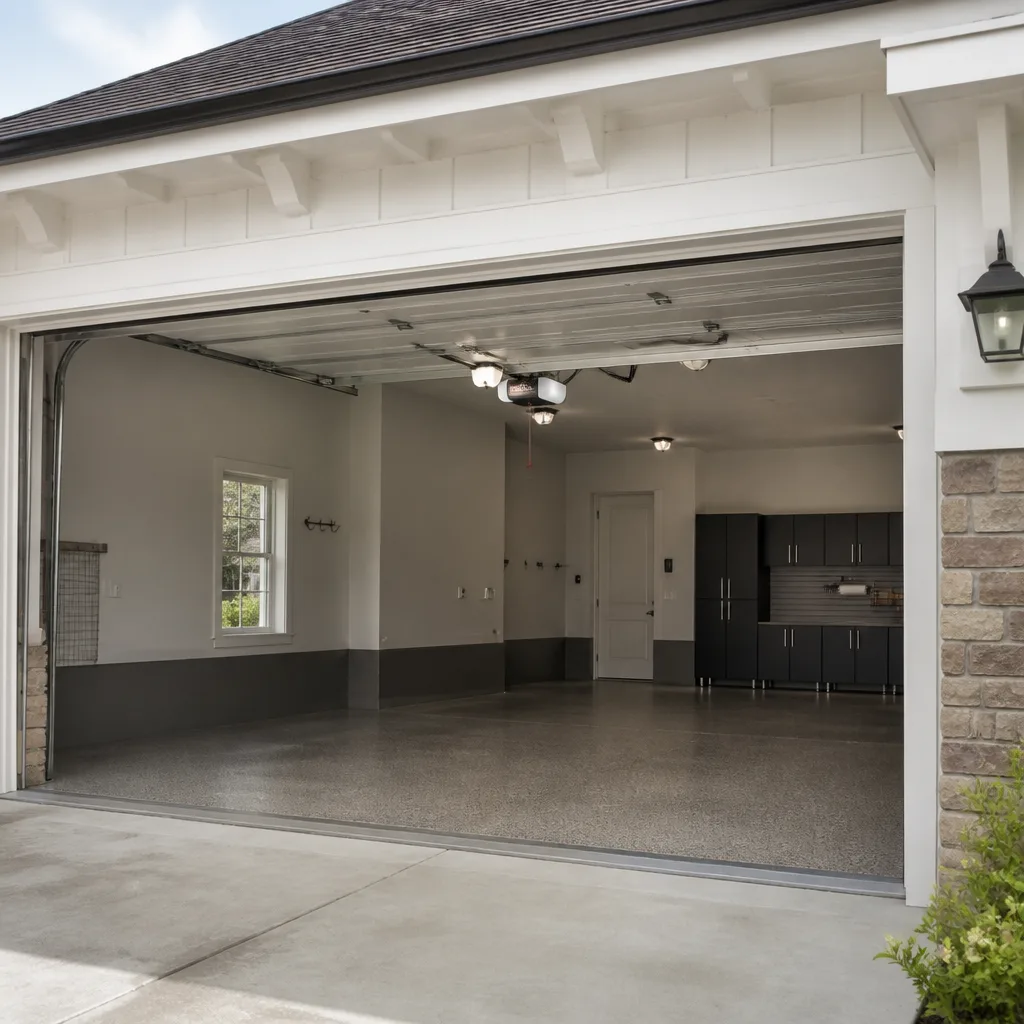
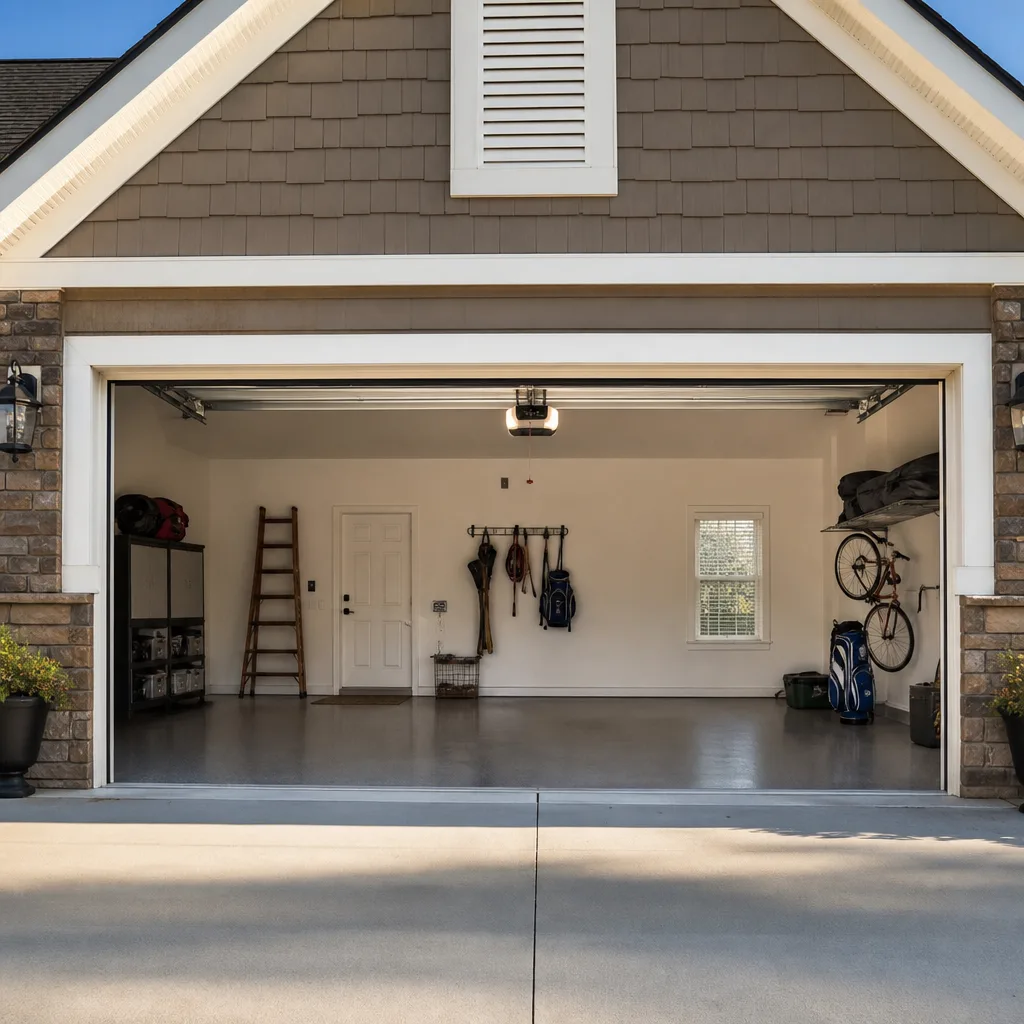
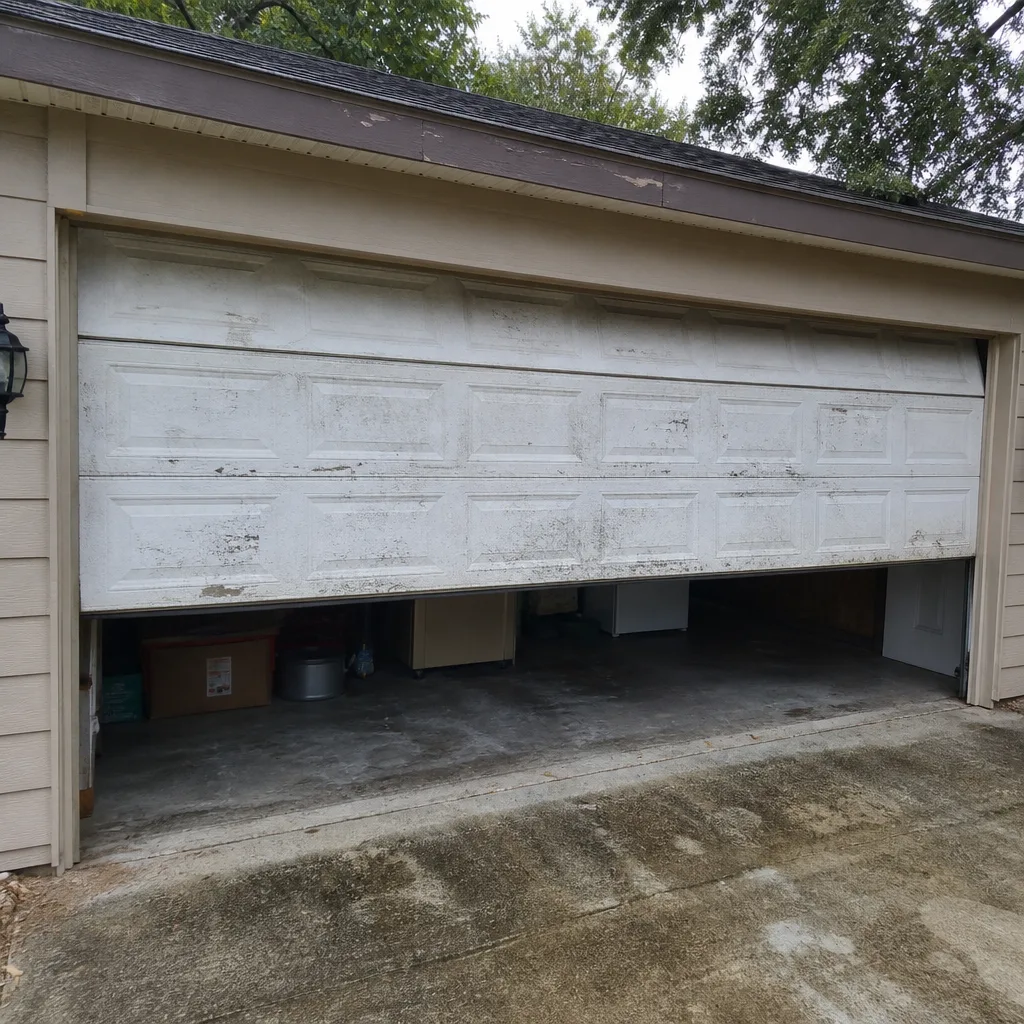 Before
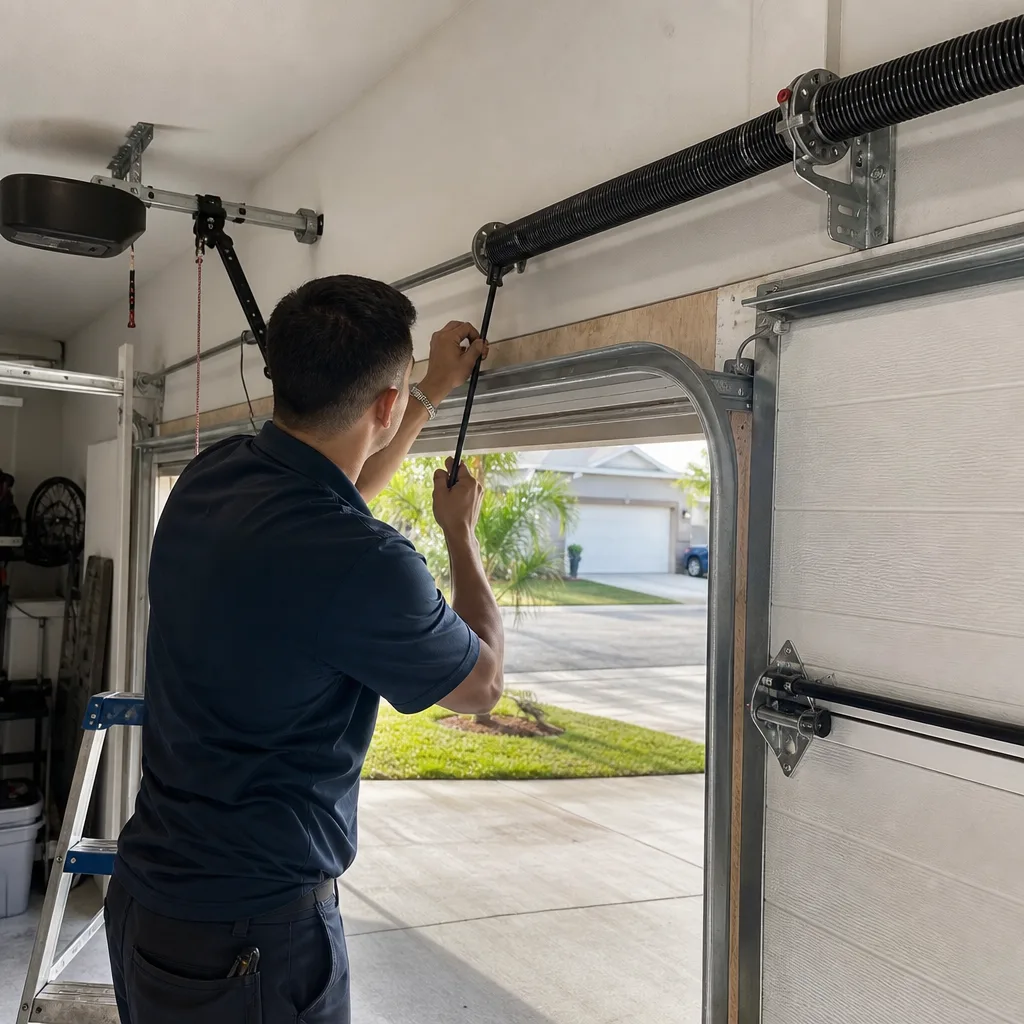 After
After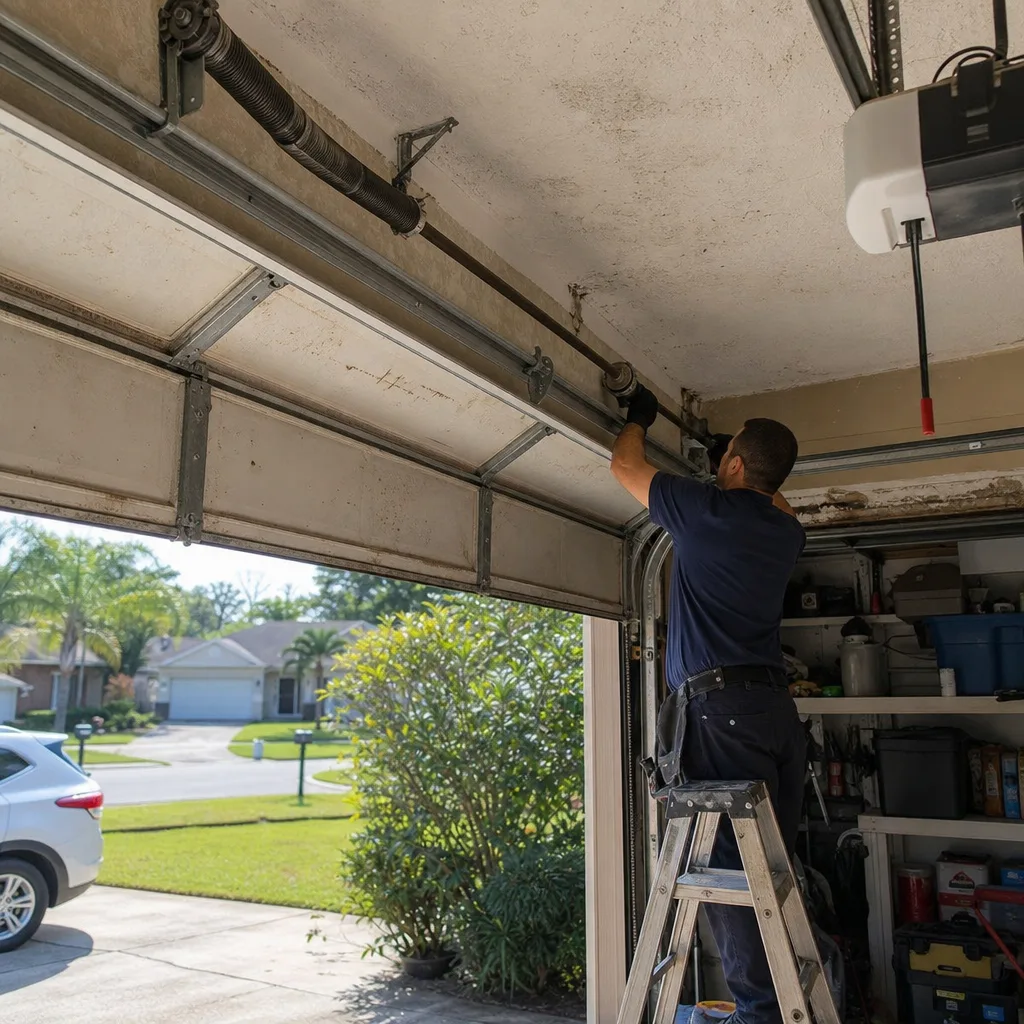 Before
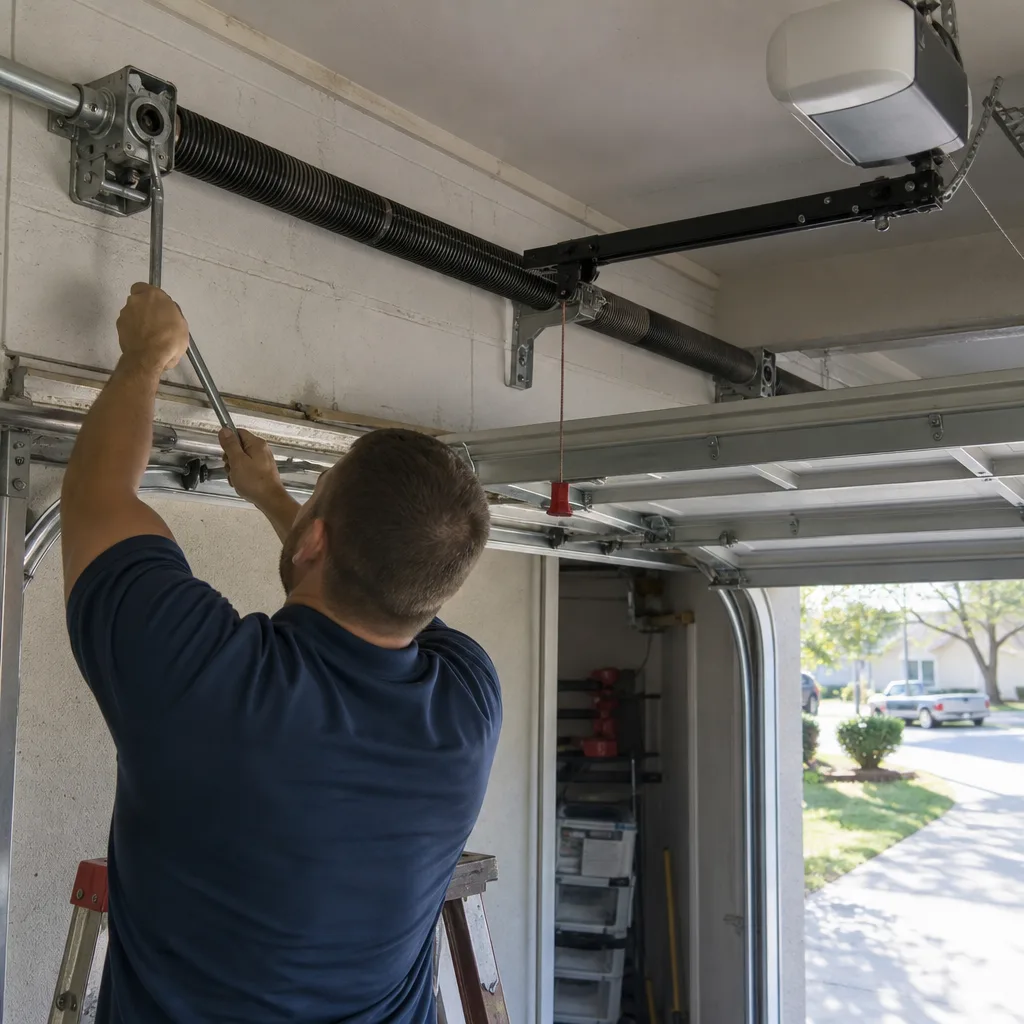 After
After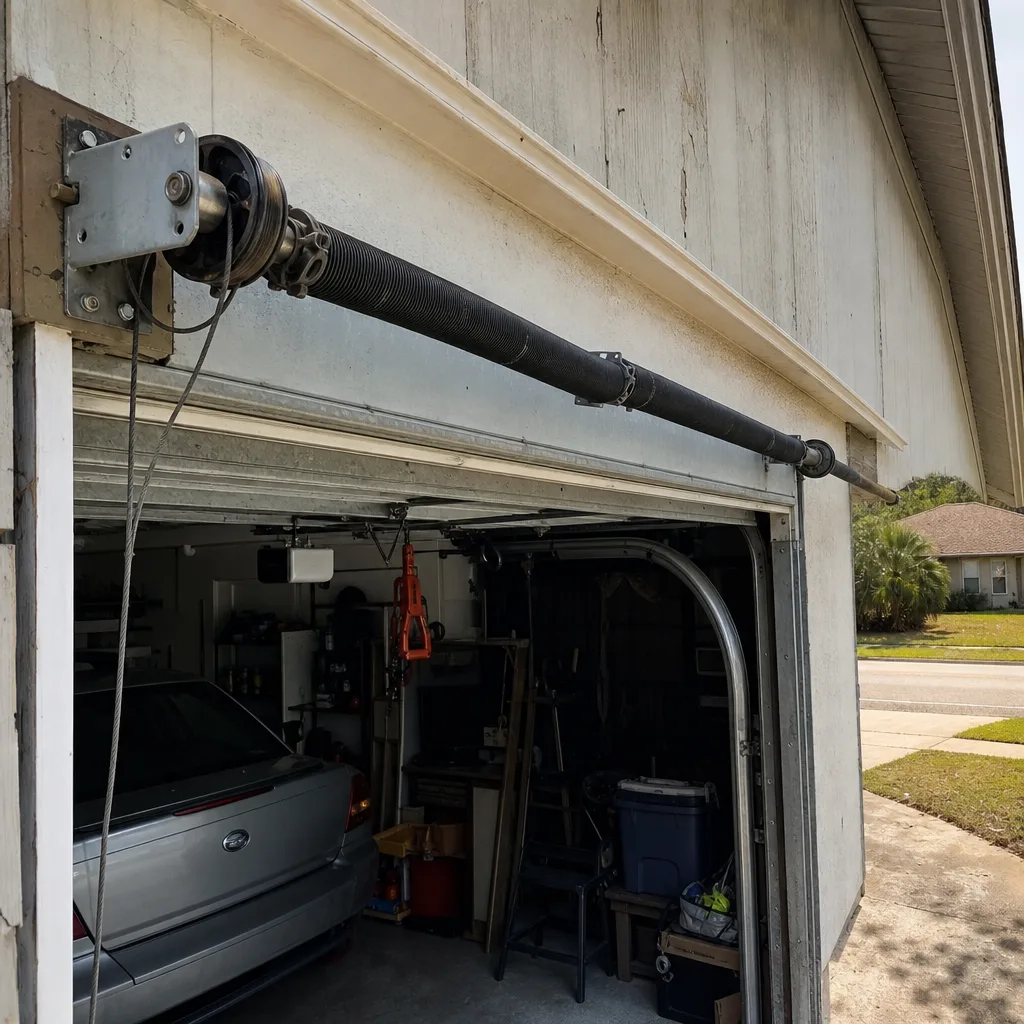 Before
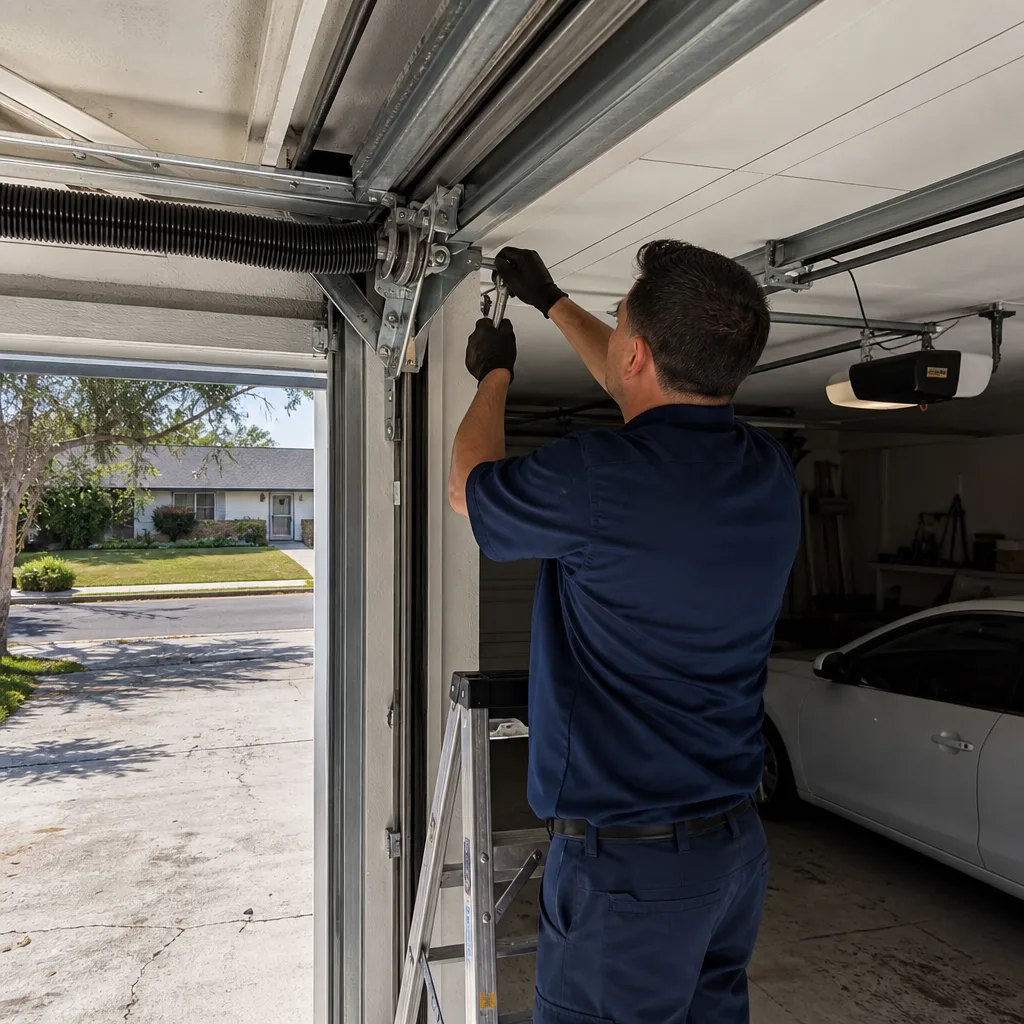 After
AfterHow to Hire a Garage Door Contractor in Brandon: A Step-by-Step Guide
Here’s a number most Brandon homeowners never hear: the difference between a $189 garage door spring and a $340 garage door spring is often 20,000 cycles. One is rated to last about five years of normal use. The other is rated to last three times that long. The cheaper quote wasn’t a better price. It was a different product, quoted by someone who never told you the difference. This guide teaches you to read a garage door quote line by line before you compare totals, because in Brandon’s humid, salt-adjacent climate, what you don’t know about the parts being quoted is exactly what costs you later. For a deeper dive, see our Complete Guide to Garage Door in Brandon.
Quick Answer
To hire a garage door contractor in Brandon, verify their Florida DBPR license online, require a written line-item quote before any work starts, check that the quote specifies cycle ratings and gauge on springs plus brand names on all parts, and ask for a documented photo record of any failed component before you approve a replacement. A contractor who quotes before photographing the failed part is skipping a diagnostic step, and a contractor who won’t put the price in writing is telling you something about how the final invoice will go.
Table of Contents
- Step 1: Verify the Florida License Before You Call Back
- Step 2: Read the Quote Line by Line, Not Bottom Line to Bottom Line
- What Cycle Ratings and Gauge Specs Actually Mean for a Brandon Door
- Brandon-Specific Red Flags That Predict a Bad Job
- The Questions That Reveal Root-Cause Thinking
- What a Written-Price-First Workflow Looks Like in Practice
- Brandon Market Realities: What Local Conditions Do to Garage Doors
- Common Mistakes to Avoid
- When to Skip DIY and Call a Professional
- Frequently Asked Questions
- The Bottom Line
BeforeAfterStep 1: Verify the Florida License Before You Call Back
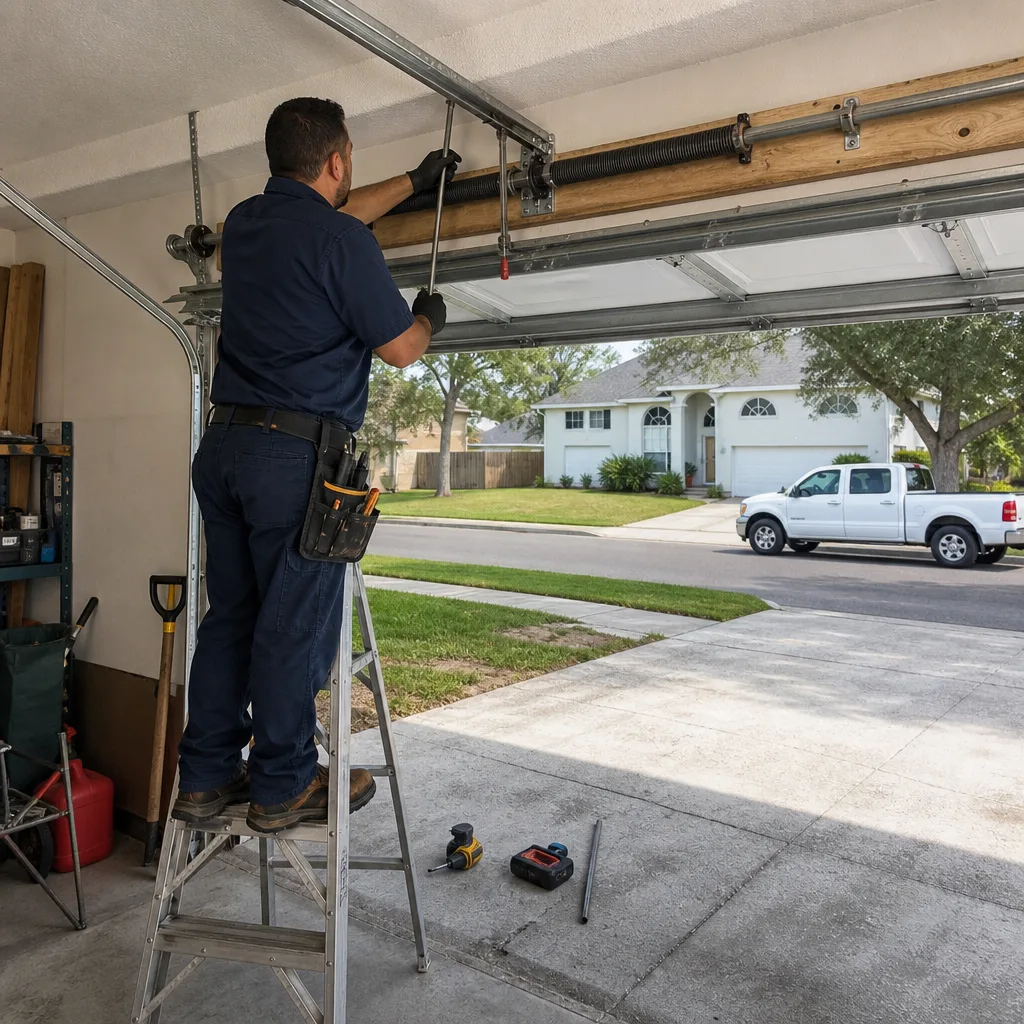
Garage door work in Florida falls under specific license categories, and knowing which one applies to your job takes about sixty seconds of your time. Garage door installation and repair is regulated by the Florida Department of Business and Professional Regulation (DBPR). A contractor doing this work in Brandon should hold either a Certified Garage Door Contractor license, a Registered Garage Door Contractor license, or in some cases a general contractor’s license that explicitly covers garage door work.
Here’s the sixty-second verification process that works every time:
- Go to the Florida DBPR website and click “Verify a License.”
- Enter the contractor’s name or license number. The license number should be printed on their vehicle, their estimate, and their business card. If it’s not anywhere, that’s your first piece of information.
- Check the license category. “Garage Door Contractor” is what you’re looking for. A specialty license for something else, like aluminum work or general repairs, may not cover the scope of work you need.
- Check the status. Active is good. Delinquent, inactive, or revoked tells you everything.
- Check for complaints or disciplinary actions. These are public record in Florida. A contractor with three complaints about unreturned deposits is not a hidden gem.
- Confirm the business name matches. Some operators borrow license numbers. If the name on the license isn’t the name on the invoice, ask why before you sign anything.
In our experience in Brandon, most homeowners skip this step because the door is already broken and they want it fixed today. That’s understandable. But a broken garage door that waits an extra hour for a license check is cheaper than a door fixed by someone without one who then can’t be found when the spring breaks again in six months.
Step 2: Read the Quote Line by Line, Not Bottom Line to Bottom Line
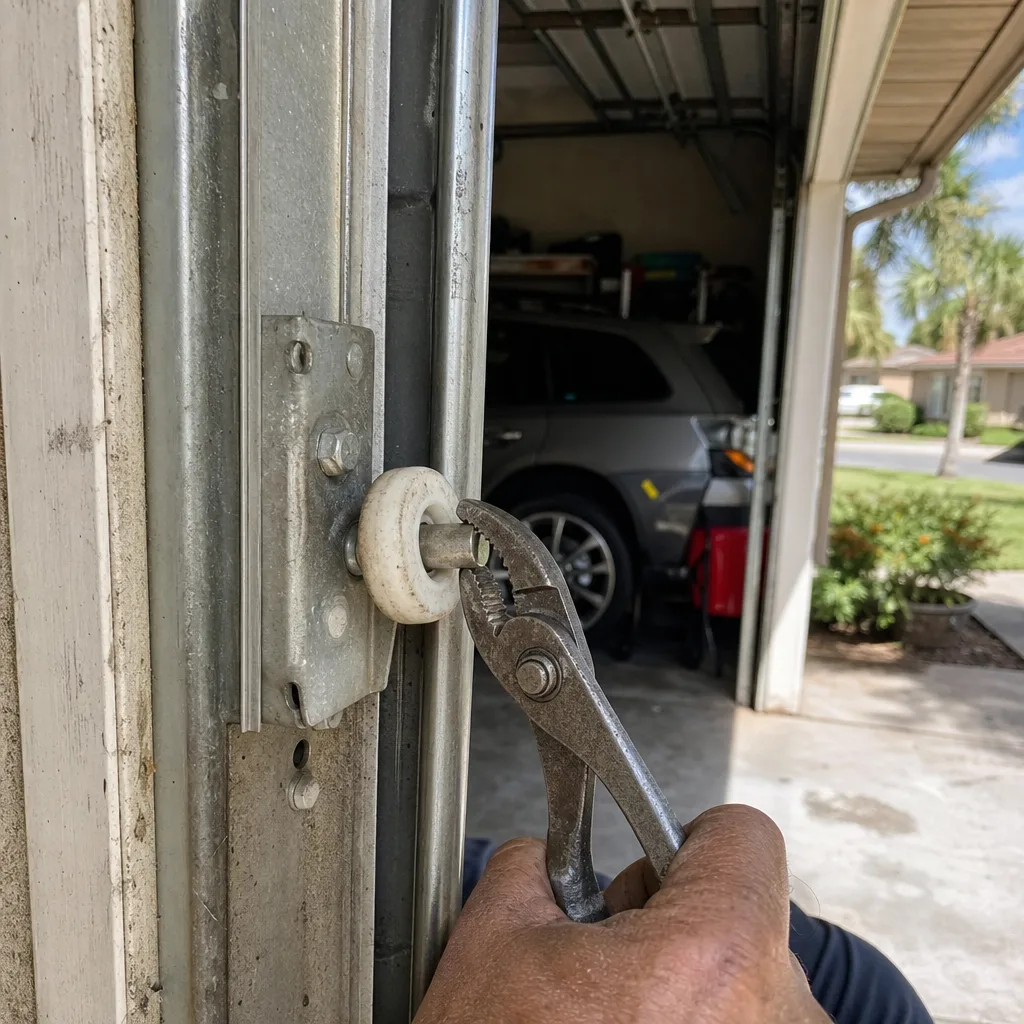
The standard advice is to get three quotes and pick the middle one. The problem with that advice is that it assumes the three quotes describe the same job. In garage door work, they often don’t. Two quotes for “spring replacement” can differ by $150 or more because one specifies a 10,000-cycle spring and the other specifies a 30,000-cycle spring. The bottom line isn’t the comparison. The line items are.
A legitimate garage door quote in Brandon should include, at minimum, these line items:
- Component name and location: “Torsion spring, left side, above door opening.” Not “spring fix.”
- Part specifications: Wire diameter in decimals (like 0.225-inch or 0.250-inch), spring length, inside diameter, and cycle rating. A quote that says only “spring replacement” with a dollar amount is describing a payment, not a repair.
- Brand name: If the quote includes a motor, logic board, or an entire door, the brand should be named. LiftMaster, Chamberlain, Genie, and Clopay all make different lines at different durability tiers. “Good quality opener” is not a specification.
- Labor hours or flat rate: Flat-rate pricing is normal for garage door work. If the quote itemizes labor separately, that’s fine too. What matters is that the total is fixed and written.
- Warranty terms in writing: Parts warranty, labor warranty, and what voids each. A verbal warranty is a rumor with eye contact.
- Scope boundaries: What’s included and what isn’t. If the quote says “spring replacement” and the tech later says the cables also need replacing for $80, was cable inspection part of the quoted scope? You should already know before you approve the work.
When a quote omits cycle ratings, gauge specs, or brand names, the omission is usually not an oversight. It’s a positioning strategy. The contractor is trying to keep the price low to get the job, and the fastest way to do that is to quote the cheapest part that will technically fit. It will work. For a while. And then you’ll pay again. Brandon’s heat and humidity accelerate spring fatigue and rust, which means a 10,000-cycle spring in this market often fails closer to 8,000 cycles, and you get to repeat the entire experience in four years instead of ten. Our Seasonal Garage Door Care for Brandon: Year-Round Homeowner’s Guide explains how to protect your investment.
What Cycle Ratings and Gauge Specs Actually Mean for a Brandon Door
A cycle is one full open-and-close of the garage door. Spring manufacturers rate torsion springs by the number of cycles they’re engineered to survive before metal fatigue makes failure likely. A 10,000-cycle spring is the budget option. It’s the spring spec that goes into new construction homes by default, because the builder isn’t the one living there when the spring eventually goes. A 20,000-cycle spring usually costs 30 to 50 percent more and lasts twice as long. A 30,000-cycle spring is the durability tier professionals put on their own homes.
Here’s the math for a typical Brandon household that opens the garage door four times a day:
- 4 cycles per day × 365 days = 1,460 cycles per year
- A 10,000-cycle spring lasts roughly 6.8 years in theory, but in Brandon’s humidity and heat, practical lifespan often drops to 5-6 years.
- A 20,000-cycle spring lasts roughly 13.7 years in theory, with practical lifespan around 11-12 years in this climate.
- A 30,000-cycle spring lasts roughly 20 years in theory, with practical lifespan anywhere from 17-19 years, likely outliving the rest of the door mechanisms.
Wire gauge matters because it’s part of what determines cycle rating. A thicker wire coil flexes less with each cycle, which means it fatigues slower. But gauge without length and inside diameter is incomplete. A spring is a tuned component: the wire diameter, the coil length, the coil diameter, and the number of coils all work together to balance the weight of your specific door. A 16-foot steel carriage door weighs far more than a 7-foot single aluminum door, and the springs have to match the weight exactly.
When we quote spring replacements in Brandon, the quote names the cycle rating and the wire spec because Clause 1 of The Haven Standard requires the written scope to say what you’re buying before you buy it. If a contractor can’t or won’t tell you the cycle rating on the spring they’re quoting, they either don’t know the spec, which is a knowledge problem, or they don’t want you to compare it against another quote, which is a transparency problem. Either way, you’ve learned something useful.
Brandon-Specific Red Flags That Predict a Bad Job
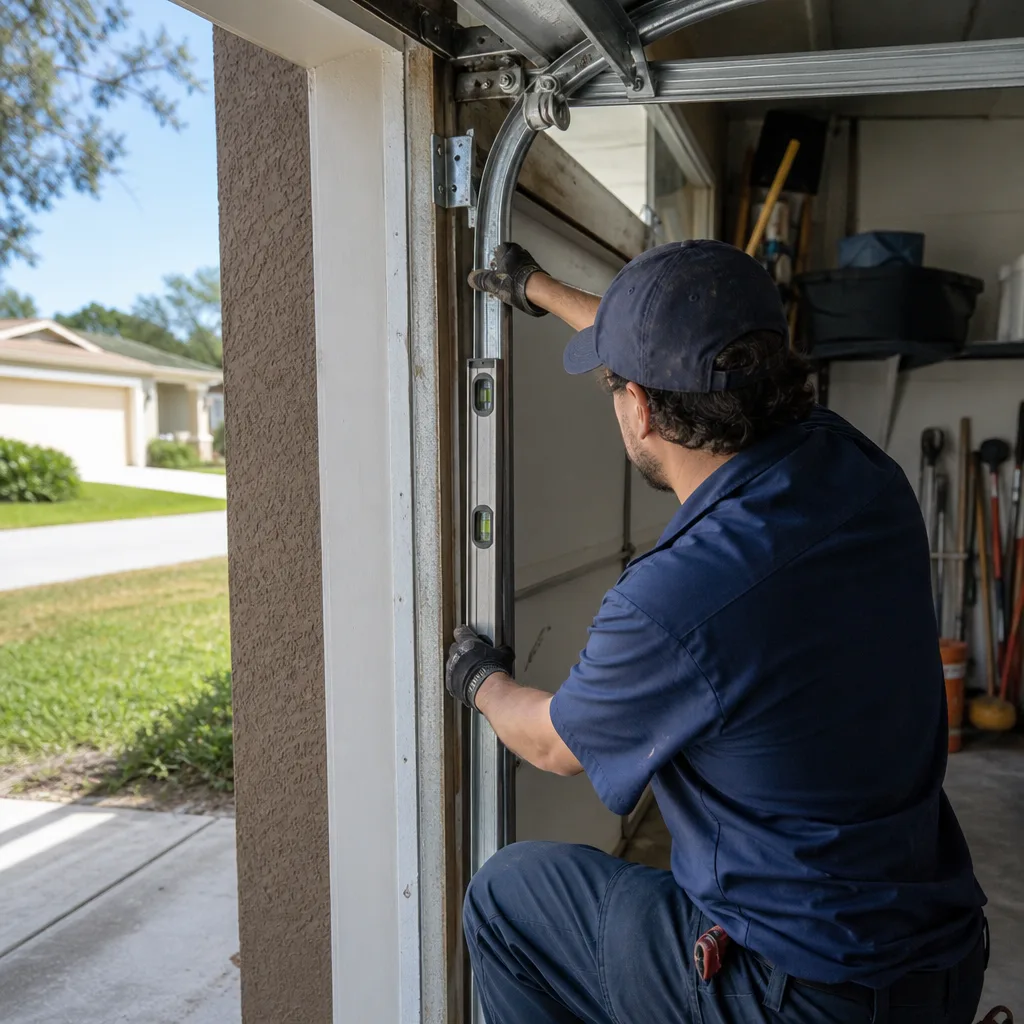
Every city has its particular garage door failure patterns, and Brandon has a few worth knowing before you pick up the phone. Understanding the local market also helps you spot the operators who are working it harder than they’re working your door.
Red Flag 1: The Quote Can’t Be Photographed
If a contractor quotes a spring replacement without first photographing the failed spring, they’re asking you to approve a repair based on a diagnosis that exists only in their head. The founding rule at Servo Garage Doors Brandon home came from exactly this problem: before any replacement is quoted, the failed component is photographed and shown to the customer. Clause 4 of The Haven Standard codifies it. You should expect the same from anyone you hire. A photo lets you see the crack, the rust, the stretched coil, whatever it is, before you agree to pay for a replacement.
Red Flag 2: Pressure to Decide Before the Tech Leaves
This is the oldest and most effective sales tactic in field service. The technician is standing in your garage, the door is broken, and you’re told that the price is good only for today. The implication is that waiting means paying more. But there is no market in Brandon where garage door springs go on sale. A written quote that’s honest remains honest tomorrow morning. A quote that expires when the truck pulls out of the driveway is not a pricing strategy. It’s a decision-pressure strategy, and it’s designed to stop you from getting a second opinion. The Garage Door Repair in Brandon market is competitive enough that you can get a second opinion same-day or next-day. Use that leverage.
Red Flag 3: The Warranty is Verbal, Not Written
Ask what the warranty covers and where it’s written down. If the answer is “don’t worry, we stand behind our work,” that’s not a warranty. That’s a sentence. A real warranty names the part, names the coverage period, names what voids it, and comes on paper or in an email before you pay. In Florida, high humidity means rust, and rust is what contractors blame when a spring fails prematurely. A written warranty prevents the post-failure conversation from becoming a debate about whether your garage was “too humid.” It’s Florida. It’s always humid. The warranty should be written with that in mind.
Red Flag 4: No License Number on the Vehicle, the Estimate, or the Website
Florida DBPR requires contractors to display their license number on business vehicles and advertising. If you can’t find a license number anywhere, you’re not looking at a contractor. You’re looking at someone with a truck and a conviction. The DBPR license lookup takes sixty seconds, and it tells you whether this person has done this work before, whether they’re in good standing, and whether other Brandon homeowners have filed complaints.
The Questions That Reveal Root-Cause Thinking
The difference between a parts-changer and a diagnostician comes down to the questions they can answer. When you’re evaluating a contractor in Brandon, ask these questions and listen carefully to the answers:
1. “Why did this part fail?” A parts-changer will say “springs just wear out.” A diagnostician will tell you whether the spring broke due to normal cycle fatigue, rust from humidity, a door that was out of balance, or an opener that was struggling against added weight. The answer tells you whether they looked at the whole system or just the broken piece.
2. “If we replace only the broken spring, what does the unbroken spring do to the new one?” Torsion springs are changed in pairs when one fails because the surviving spring is the same age, has the same cycle count, and will fail soon after. But a more subtle issue is that a fresh spring paired with a fatigued spring creates an unbalanced door, which stresses rollers, hinges, and the opener. A contractor who explains this is doing root-cause work. A contractor who says “we can just do one” is either trying to lower the price at the expense of the repair, or doesn’t know better.
3. “What spec spring was on there before, and what are you quoting now?” If the old spring was 0.250-inch wire and the quote is for 0.225-inch wire to match the price of a competitor, you’ve caught the product-swap. The old spring might have been oversized for the door, in which case a correction is fine. But the contractor should be able to explain that correction.
4. “Can I see the failed part before you replace it?” Every time we answer this, the answer is yes, because the photo is part of the record. You should receive a documented photo record on every visit, not as a courtesy but as evidence of what was found and what was done. If a contractor seems reluctant, ask yourself what a photo would show that they don’t want you to see.
5. “Is the price you quoted the price I’ll pay, even if the job gets more complicated?” The answer you want is that the quoted price is the price, and if something changes, the new price is quoted and approved in writing before additional work starts. No exceptions. A contractor who says “we’ll see when we get in there” has just voided their own quote.
What a Written-Price-First Workflow Looks Like in Practice
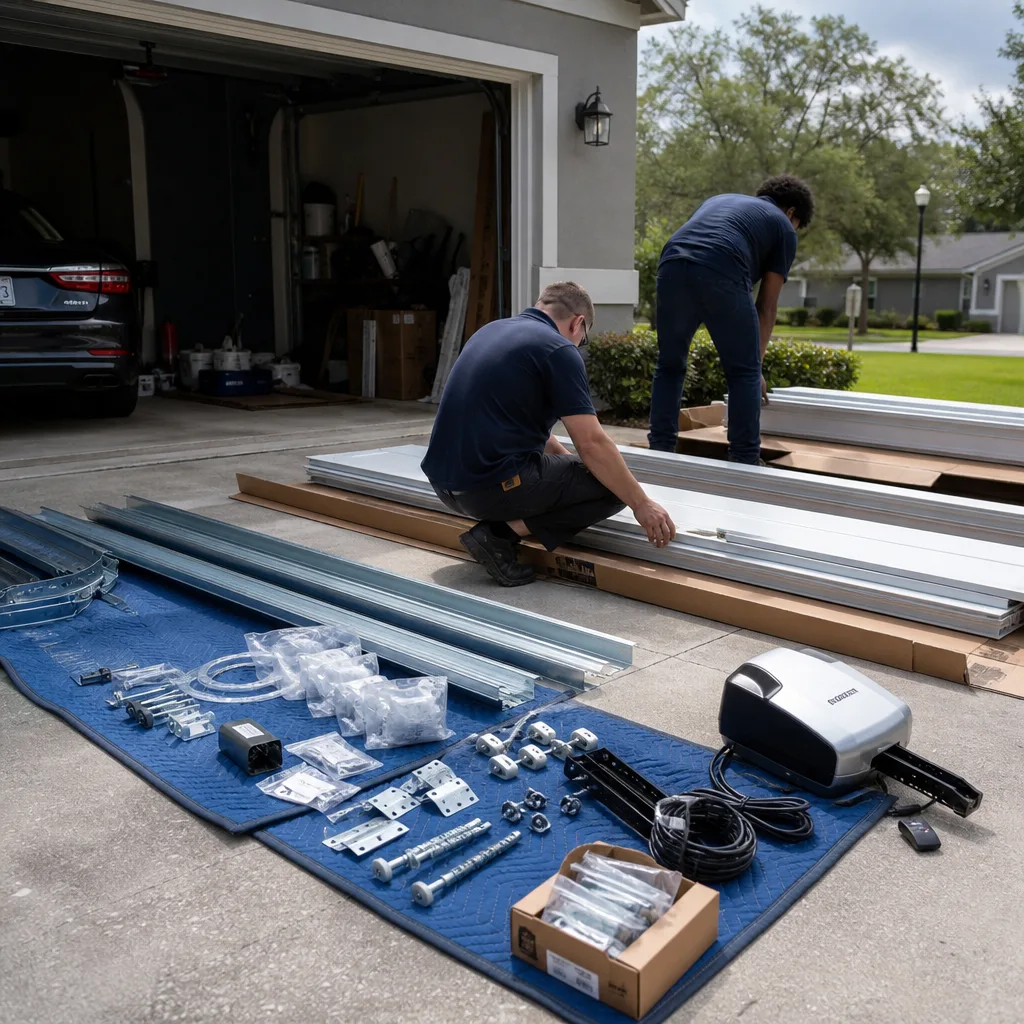
Here’s the sequence that should happen when you hire a garage door contractor in Brandon, step by step:
- You call or book online. You describe the problem. The person on the phone gives you a service window or a same-day arrival time. You’re not asked to guess the problem; you’re asked what the door is doing.
- The technician arrives, inspects, and photographs. Before quoting anything, the tech examines the door, the springs, the rollers, the cables, the tracks, and the opener. The failed component gets photographed. You’re shown the photo on the spot.
- The written quote is produced before any work starts. You receive a flat, written price and a written scope of work. The scope names the parts, the brands, the specs, and the warranty. No work begins until you approve it in writing. Clause 1 of The Haven Standard exists because a verbal estimate has an uncanny way of turning into a different invoice.
- The work is done. The technician installs the parts, tests the door, checks the balance, confirms the opener’s force settings are within spec, and runs the door through multiple cycles.
- The documentation is delivered. You receive a photo record of what was found, what was done, and the final state of the door. The warranty is in writing. The invoice matches the quote. You don’t have to remember what was said; you have what was recorded.
A contractor who quotes before photographing the failed part is skipping step 2. That’s the diagnostic step. Without it, the quote is based on the symptom you described, not the condition of the system. Sometimes that works out fine. Sometimes it produces a quote for a spring that doesn’t address the rusted cables that fail two months later, and you get to make the call all over again.
Brandon Market Realities: What Local Conditions Do to Garage Doors
Garage doors in Brandon have a specific set of enemies, and any contractor working here should know them. The first is humidity. Brandon sits inland from Tampa Bay, far enough from the coast that salt spray isn’t a constant concern, but close enough that the air holds moisture year-round. That moisture accelerates corrosion on torsion springs, hinges, roller stems, and cable anchors. A spring that would last 10,000 cycles in a dry climate often fails at 8,000 or 9,000 here because surface rust creates micro-pits, and micro-pits become fracture points.
The second enemy is the afternoon thunderstorm cycle. From June through September, Brandon gets near-daily rain, often with wind. Garage doors take that rain on their exterior panels and bottom seals, while the humidity infiltrates the interior hardware, and power surges during lightning storms hit opener logic boards. We replace more logic boards between June and September, in our experience, than in the other eight months combined. If you’re buying a new opener in Brandon, a surge protector on the opener’s circuit is not an upsell; it’s the cheapest insurance you’ll buy this year.
The third factor is door weight and wind rating. Homes built in Brandon after the 2002 Florida Building Code updates often carry reinforced doors with wind-load ratings. These doors are heavier than the older single-skin steel doors they replaced. Heavier doors need heavier springs, and heavier springs need correct specifications. A contractor who doesn’t ask about your door’s weight, panel construction, or wind-load rating is guessing, and a wrong guess on spring spec means a door that’s out of balance, an opener that works itself to death, or both.
If you’re in the market for new construction or a full replacement, Garage Door Installation in Brandon requires a contractor who understands these local conditions and specs the door accordingly. A door that’s correct for a Phoenix garage is not a door that’s correct for Brandon.
Common Mistakes to Avoid
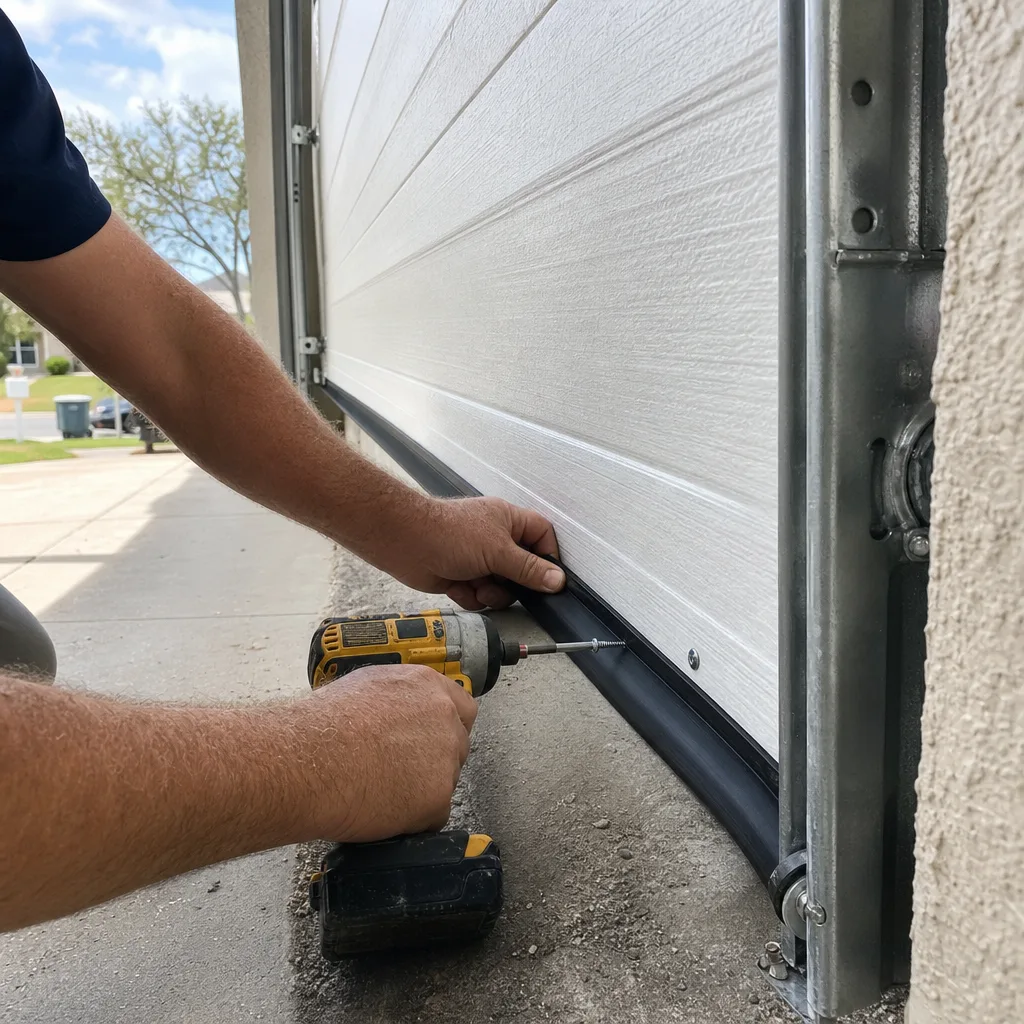
- Comparing quotes by total only. Two quotes for the same job aren’t the same job if one specifies 30,000-cycle springs and the other says “spring replacement” with no spec. You’re not comparing price. You’re comparing products that happen to fit the same door.
- Approving a quote you never saw in writing. A verbal estimate is not an estimate, it’s a conversation. If there’s no written scope, there’s no basis for disputing the final invoice, and in Brandon’s competitive market, there’s no reason to accept that risk.
- Replacing only the broken spring when the other one is the same age. Torsion springs fail as a pair. The survivor has the same cycle count and the same metal fatigue. Replace one and you’ll be back for the other within a year, plus you’ll have an unbalanced door in the meantime.
- Skipping the license check because the door is broken. The DBPR verification takes sixty seconds. Nobody is so busy that they can’t spend sixty seconds to avoid handing money to an unlicensed operator who may not be reachable when the repair fails.
- Accepting “we stand behind our work” as a warranty. “We stand behind our work” is a sentence, not a document. If the warranty isn’t written down with coverage terms, exclusions, and a period, it doesn’t exist in any way a court or a credit-card dispute would recognize.
- Letting urgency override documentation. The contractor who says “we can fix it right now” but won’t write the price down first is testing whether your urgency is stronger than your judgment. Slow down for four minutes. Get it in writing.
- Not asking the openers question before replacing a door. If the opener is a 2015-era Chamberlain and it’s already struggling, a new heavier door can push it past its limit. The contractor should evaluate the door and the opener together, not independently.
When to Skip DIY and Call a Professional
Garage door work sits at an odd intersection: it looks approachable from the outside, and some of it genuinely is. Lubricating rollers, tightening visible bolts, and cleaning the photo-eye lenses are all safe DIY tasks. But the torsion springs that counterbalance the door’s weight are under enough tension to remove fingers or worse if they release incorrectly. The cables, the spring anchor brackets, and anything connected to the torsion tube are off-limits unless you’re a trained professional. A disengaged torsion spring doesn’t look dangerous when it’s mounted on the wall, and that’s exactly why it is.
If your door makes a loud bang and one side sags, the spring has already failed and the door is now held up by nothing but the opener and the tracks. Don’t try to force it open. Don’t climb under it. Call someone who does this work professionally. Garage Door Opener Repair & Installation in Brandon covers the electrical half of the system, which has its own safe-DIY limits: if the opener isn’t the problem, or if you smell burned insulation near the motor, stop troubleshooting and call. Servo Garage Doors Brandon offers free estimates to Brandon homeowners, reachable at (656) 216-3212.
Frequently Asked Questions
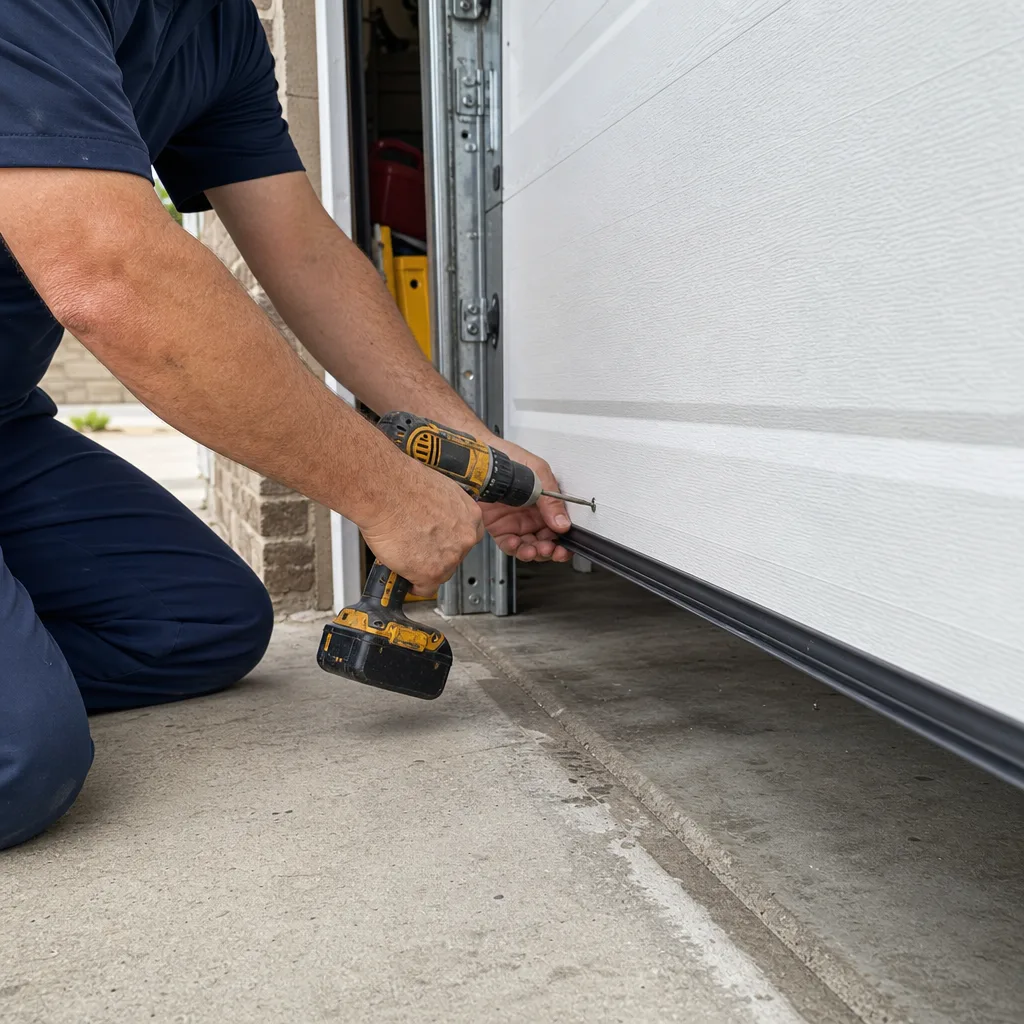
Go to the Florida DBPR website, select “Verify a License,” and enter the contractor’s name or license number. Look for the “Garage Door Contractor” category, an active status, and no disciplinary actions. The entire check takes about sixty seconds. If the number isn’t printed on the vehicle or the estimate, verify that it matches the name on the invoice before signing anything. Call (656) 216-3212 and we’ll give you our license number directly, along with a written quote.
Garage door spring replacement in Brandon typically ranges from $180 to $340 for a single-spring job depending on the cycle rating, gauge spec, and door weight, and from $300 to $600 for a pair of springs at the 20,000-cycle tier. A 10,000-cycle budget spring will sit at the lower end of that range and fail roughly twice as fast in Brandon’s humidity. Call (656) 216-3212 for a written, flat-price quote with the cycle rating stated in writing.
Not if you’re working with a contractor who quotes a flat, written price after inspection. The entire point of a written scope of work is that the price you approve is the price you pay. If something additional is needed during the job, the new price is quoted and approved in writing before additional work starts. Clause 1 of The Haven Standard exists specifically to answer this question. Call (656) 216-3212 for a quote that won’t drift after the tech opens the door.
For spring failures, broken cables, and doors that won’t close, yes. Same-day service is standard in Brandon for emergency repairs, and live phone coverage should be available on weekends and holidays. If a contractor can’t give you a time window when you call, keep looking. Servo Garage Doors Brandon answers calls 24/7 with a real person and schedules emergency repairs same day. Call (656) 216-3212.
Yes, in almost every case. Torsion springs are installed in pairs that wear together, and the surviving spring has the same cycle count and the same metal fatigue as the one that failed. Replace one and the other fails within a year, plus the door runs out of balance in the meantime. A reputable contractor will explain this up front, quote the pair, and put the cycle rating in writing. Call (656) 216-3212 for a written price on a paired spring replacement.
A legitimate quote should name the part, the brand, the specifications like spring cycle rating and wire gauge, the labor, the warranty terms in writing, and the boundaries of the scope. Quotes that say only “spring replacement” with a dollar figure are describing a payment, not a repair. At Servo, the written scope is delivered before any work starts, per The Haven Standard, along with photo documentation of the failed component.
The Bottom Line
Hiring a garage door contractor in Brandon comes down to three controls you have and should use: verify the license, read the quote line by line, and require a written scope before approval. The quote is a specification document, not just a number, and the difference between a cheap job and an honest job often lives in the details like cycle ratings, gauge specs, and brand names. The contractor who writes it all down, photographs what failed, and charges the same price they quoted is the one you want. The contractor who skips any of those steps is telling you how the whole engagement will go. Pay attention to that. For more guides & resources, visit our blog, or call (656) 216-3212 for a free, written, flat-price estimate from Servo Garage Doors Brandon, serving Brandon since 2015.
Written by Marcus Deller, Owner at Servo Garage Doors Brandon, serving Brandon since 2015.